
A tantrum is an outburst with a goal: your child wants something, and the screaming, crying or flopping is how they push for it. A meltdown is an overload response: your child’s nervous system is overwhelmed, and they cannot stop, bargain or listen, even if you give them what they asked for. The two can look almost identical from across a grocery store, which is why so many parents feel unsure which one they are facing.
This guide explains how to tell them apart, what helps in each case, and when a pattern is worth bringing to a professional. You are not failing if you can’t tell in the moment. Most parents can’t, at first.
A tantrum is typically goal-oriented. According to Understood, tantrums are behaviours that communicate frustration or a specific want, and they often stop once the child gets what they want or realizes they won’t.
That does not mean a tantrum is manipulation in a sinister sense. Toddlers have big feelings and very few words. Alberta Health Services has noted that toddlers can become frustrated because they can’t yet express what they feel and think, which is part of why fits are common at that age.
Common features of a tantrum:
A meltdown is a different thing. Understood describes meltdowns as physiological, involuntary reactions to being overwhelmed by sensory input, emotional stress or cognitive demands. They generally do not stop simply because a want is granted.
Think of a child who has held it together through a loud birthday party, a scratchy shirt and three changes of plan, and then falls apart over a cracked cracker. The cracker is not the cause. It is the last straw.
Common features of a meltdown:
| Tantrum | Meltdown | |
|---|---|---|
| Purpose | Has a goal, such as getting or avoiding something | No goal, an overload response |
| Control | Child keeps some control | Child has lost control of emotional functioning |
| Trigger | Usually clear and immediate | Often unclear, cumulative or sensory |
| Audience | Reacts to your response | Mostly unaffected by who is watching |
| What ends it | Goal met, goal dropped, or attention shifts | Nervous system settles, or the environment changes |
| Giving in | Usually stops it (and may teach that it works) | Usually changes nothing |
| Afterward | Quick recovery | Exhaustion, distress, slow recovery |
The table is a guide, not a diagnosis. Real life is messier, and a single episode can show features of both.
Many families are surprised that the two are not separate boxes. A child may begin with a tantrum to get a snack or avoid leaving the park. If the need stays unmet, or the setting becomes too loud, bright or crowded, it can spiral into a meltdown, where the child loses control.
This matters because the right response changes midway. If you notice your child’s behaviour shift, the pleading becomes panicked, the eye contact disappears, the crying becomes harder to interrupt, stop using tools meant for tantrums (firm limits, consequences, ignoring) and switch to calming tools.
A useful check while it is happening: ask yourself, “Could my child stop right now if I gave them what they want?” If the honest answer is no, treat it as a meltdown.
A tantrum is a chance to practise boundaries with warmth. Keep it simple.
The Alberta Health Services advice reported above stresses being patient while setting firm, fair and consistent boundaries, which fits this approach.
During a meltdown, your goal is not to teach. It is to help the nervous system settle. Practitioners note that the brain’s capacity for reasoning, apologizing or negotiating is effectively offline at the peak, and reasoning, rewards or discipline then tend to make distress worse.
What helps instead:
Afterward, offer water, a snack, a quiet cuddle or alone time, whichever your child prefers. Shame has no place here: your child did not choose this.
Not necessarily. Many children with no diagnosis have meltdowns when they are tired, hungry or overstimulated. But meltdowns that are frequent and intense can be a clue worth following.
A 2025 review found that 58% of autistic children aged 2 to 5 met clinical cut-offs for heightened emotional reactivity, compared with 15% of children without developmental concerns. That tells us emotional reactivity is far more common in autistic young children, but it does not mean any single meltdown signals autism.
The nuance is important. Experts point out that emotional dysregulation is not a core diagnostic criterion of autism or ADHD, yet it is a significant contributor to the day-to-day difficulty that brings families to clinics. Often it connects to core features, such as trouble with transitions or sensory processing, as discussed in the same Conversation article.
Patterns that may point to something beyond ordinary development:
If you are wondering about attention differences specifically, our article on whether ADHD is on the autism spectrum explains how the two overlap. If you want to understand the assessment process for a child, see what parents should know about ADHD assessments.
Tantrums are a normal part of early childhood. The Canadian Academy of Child and Adolescent Psychiatry’s joint statement on preschool disruptive behaviour recognizes that some non-compliance, temper tantrums and aggression between ages two and five are part of development, while noting that disruptive behaviour problems in preschoolers can also be risk factors for, or components of, neurodevelopmental and mental health conditions.
So what looks typical?
Meltdowns are not limited to children. Teens and adults have them too, usually after prolonged stress or overload, and the same principles of low stimulation and calm company apply.
One rough day is not a pattern. Look at frequency, intensity and impact on daily life. Professional guidance, such as the Toronto District School Board’s page on seeking help, suggests outside support when outbursts:
Clinicians also emphasize that frequent outbursts should not be handled in isolation. An evaluation can help identify whether manageable conditions, such as ADHD or anxiety, are contributing, so your family has evidence-based strategies rather than guesswork.
Alberta Health Services also describes a condition called disruptive mood dysregulation disorder, where children are irritable or angry most of the time and have frequent, intense temper outbursts, usually three or more times a week. Only a qualified professional can say whether this applies to your child.
If you feel afraid that you or your child might cause harm, call 911. You can also call or text 988, Canada’s Suicide Crisis Helpline, at any hour, or call 811 in Alberta to speak with a health professional.
We meet many parents who arrive worn out and a little ashamed. They have tried reward charts, time-outs and stern talks, and nothing seems to stick. Often the issue is not effort. It is that the strategy matches the wrong kind of outburst.
When we work with families, we start with curiosity rather than labels. What happened in the hours before? What was your child’s day like? What do they need that they can’t say yet? That often tells us more than the outburst itself.
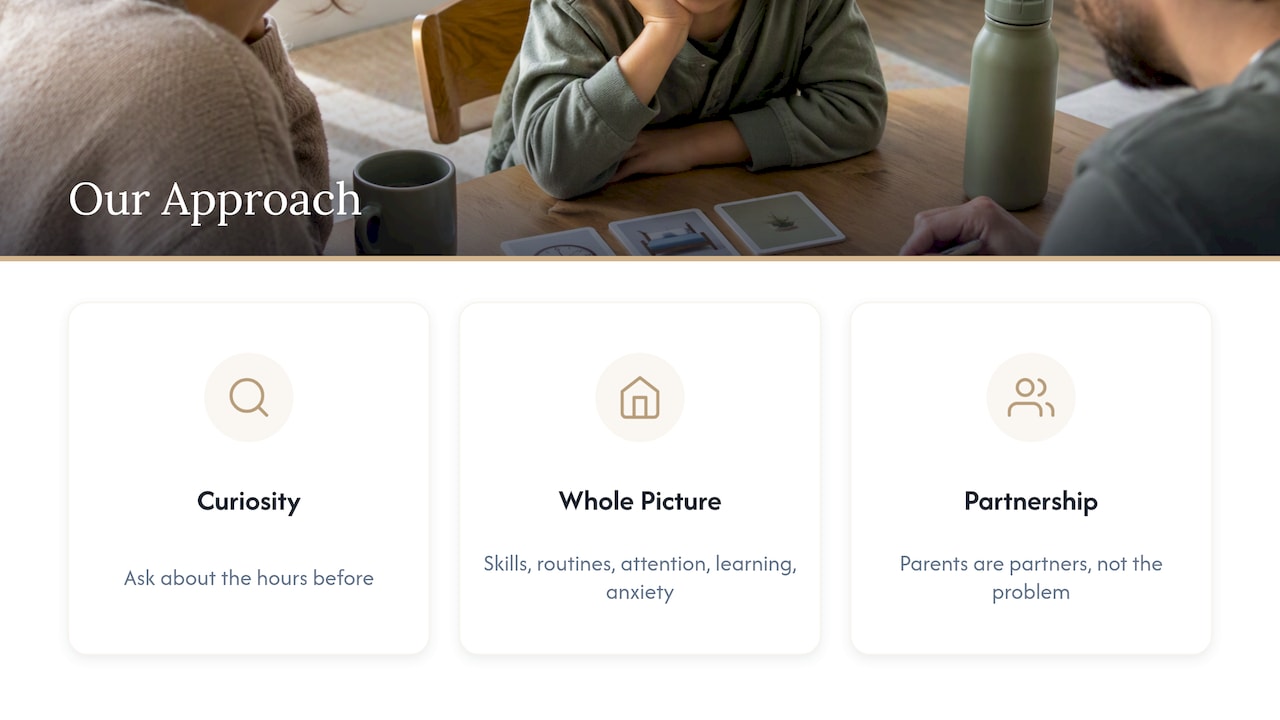
Our team works across child and adolescent counselling, family counselling, ADHD and psycho-educational assessments, and anxiety support. That range lets us look at the whole picture: a child’s emotional skills, the family’s routines, and any attention, learning or anxiety needs underneath. We prefer evidence-based approaches, and we see parents as partners, not as the problem.
One thing we say often: calm is contagious, but so is panic. You don’t have to be perfect. You have to be steady enough, often enough. If you can learn to see the pattern, you will feel less alone with it.
— Deane
If outbursts are taking a toll on your child or your household, you don’t have to sort it out alone. We offer in-person and online sessions in Calgary, Red Deer and Cold Lake, with evening and weekend availability, and no physician referral is needed. We direct bill a wide range of insurers, and every therapist offers a free 15-minute connection call so you can see whether the fit feels right before you begin.
Depending on what you are seeing, a good starting point might be:
On price, our Affordable Counselling Calgary option is 100 CAD one-off, and Affordable Counselling Red Deer is 80 CAD one-off. Fees for other services are not published here, so contact us for details.
You can’t prevent every outburst, but you can lower the odds.
Ask whether your child could stop if they got what they wanted. If yes, it is probably a tantrum. If giving in changes nothing and your child seems unreachable or frightened, it is probably a meltdown. Also look at the trigger, the recovery time and whether your child checks your reaction.
Yes. A child may start with a goal-oriented tantrum, and if the need goes unmet or the setting is overwhelming, it can spiral into a meltdown. When you see the shift, change your approach from firm limits to calming and safety.
No, not on its own. Many children have meltdowns when they are overtired or overstimulated. Frequent, intense meltdowns, especially with sensory sensitivities, trouble with transitions or attention difficulties, are worth discussing with a professional who can assess your child.
Punishment during a meltdown tends to add distress, because your child cannot process rules at that moment. Focus on safety and calm first. Once they have recovered, you can talk about what happened and what to try next time.
Consider it when outbursts are frequent or intense, interfere with friendships or school, disrupt family life, or come with lasting changes in mood, sleep or appetite. Your family doctor or a registered therapist is a good first contact, and you can book a free connection call with us to talk it through.