
Family therapy and evidence-based parent training are genuinely effective parts of ADHD care. They can reduce behavior problems and build stronger parent-child relationships over time. Guidelines point to parent training as a first-line approach for preschoolers and as a core piece of care for older children, often alongside medication. The evidence behind this comes from clinical practice recommendations and research reviews, not guesswork.
TL;DR:
- Behavioral parent training improves parenting skills and strengthens parent-child relationships; these benefits often last for several months but vary depending on program quality and duration.
- Programs like PCIT are especially effective for younger children with disruptive behaviors, providing real-time coaching during parent-child interactions.
- Longer-term success hinges on consistency, involving coordination with schools and clinicians, with weekly sessions typically lasting 8 to 12 weeks.
- Families should choose programs that measure progress regularly and consider cultural or family structure differences for tailored support.
- Starting routines, using specific praise, and practicing brief coaching moments at home can initiate positive behavior changes without waiting for formal therapy.
These terms get used loosely, so it helps to know the difference. Family therapy looks at how the whole household interacts, including communication patterns and emotional dynamics. Parent training, sometimes called behavioral parent training, teaches specific skills for managing ADHD-related behaviors day to day. A few common formats show up across clinics:
Preschoolers, school-age children with or without oppositional behavior, and families where a parent also has ADHD traits tend to benefit most, since the family-systems idea is simple: when the people around a child change how they respond, the child’s behavior often shifts too.
The Canadian Paediatric Society’s clinical practice recommendations call for non-pharmacological interventions, including parent training and behavior therapy, to be part of ADHD treatment planning. For preschool-age children specifically, the guidance recommends parent behavior training as the first-line approach before medication is considered.
A meta-analysis of behavioral parent training found small-to-moderate improvements in children’s ADHD symptoms and behavior problems, with stronger and more lasting gains in parenting practices and parent-child relationship quality, tracked over an average follow-up period of about five months, according to a meta-analytic review of longer-term outcomes. That pattern tells you something useful: the biggest wins often show up in how parents and children relate to each other, not just in symptom checklists.
A few things temper that picture:
A recent systematic review of family interventions for school-aged children found that family-based approaches reduce problematic behaviors, improve emotional regulation, and ease parental stress, with telehealth and multidisciplinary delivery becoming more common.
Once you start looking, you will find a handful of models that show up again and again, each with its own focus.
Pro Tip: If your child’s main struggle is disruptive behavior during daily routines, ask specifically about PCIT or coached-interaction formats rather than lecture-style parent classes.
Clinicians sometimes prioritize parent-only training first when immediate behavior containment is the goal, then add parent-child coaching sessions once interaction patterns themselves need attention.
Programs vary, but most follow a recognizable rhythm:
Weekly sessions for roughly 8 to 12 weeks are common for many structured programs, though timelines vary by model and family needs. Progress usually looks like fewer meltdowns, more consistent follow-through on requests, and calmer transitions, rather than a sudden personality change. Good programs also coordinate with teachers and prescribing clinicians, since consistency across school and home matters as much as the therapy itself.
You do not need to wait for a first appointment to begin making changes at home.
Pro Tip: Practice one short coaching moment a day, just two or three minutes of calm, specific feedback, rather than trying to overhaul every interaction at once.
Watch your own stress level too with parent support tips for raising neurodiverse children. Many parents of children with ADHD have ADHD themselves, and unmanaged parental symptoms can make it hard to apply behavior plans consistently, according to research on parental ADHD and family outcomes. If this sounds familiar, an adult ADHD assessment is worth exploring. If eating is a major battleground or sensory issues seem extreme, a referral to occupational therapy or a feeding specialist may help more than behavior coaching alone.
A good fit matters as much as the model itself. During an initial call, ask:
Be cautious of any provider who never measures progress, promises a quick fix, or pressures you to stop medical treatment without coordinating with your child’s doctor. A psycho-educational or ADHD assessment beforehand can also clarify what kind of support will actually help, especially if you are unsure whether behavior issues, learning differences, or something else is driving the struggle.
ADHD rarely travels alone. Many children also deal with anxiety, learning disabilities, or other developmental differences, and family therapy needs to account for that rather than treating ADHD as the only variable. A child who shuts down during homework might be dealing with both attention difficulties and an undiagnosed learning disability, and a behavior plan built for ADHD alone will miss half the picture.
Therapists working with these overlapping conditions typically adjust pacing, expectations, and reinforcement strategies to fit the specific combination a child is facing. Anxiety, for instance, often calls for gentler exposure to challenging tasks rather than firm behavioral consequences, since pushing too hard can backfire. A child with a co-occurring learning disability may need academic accommodations addressed alongside, not instead of, behavioral strategies at home.
It is worth noting that ADHD and autism spectrum traits can overlap in ways that are easy to miss without a careful evaluation. If your child’s behavior does not respond the way you would expect from standard ADHD strategies, that is a signal to ask for a broader assessment rather than assuming the first approach failed. Family therapy works best when it is built around the full picture of what is happening for your child, not a single diagnosis in isolation.
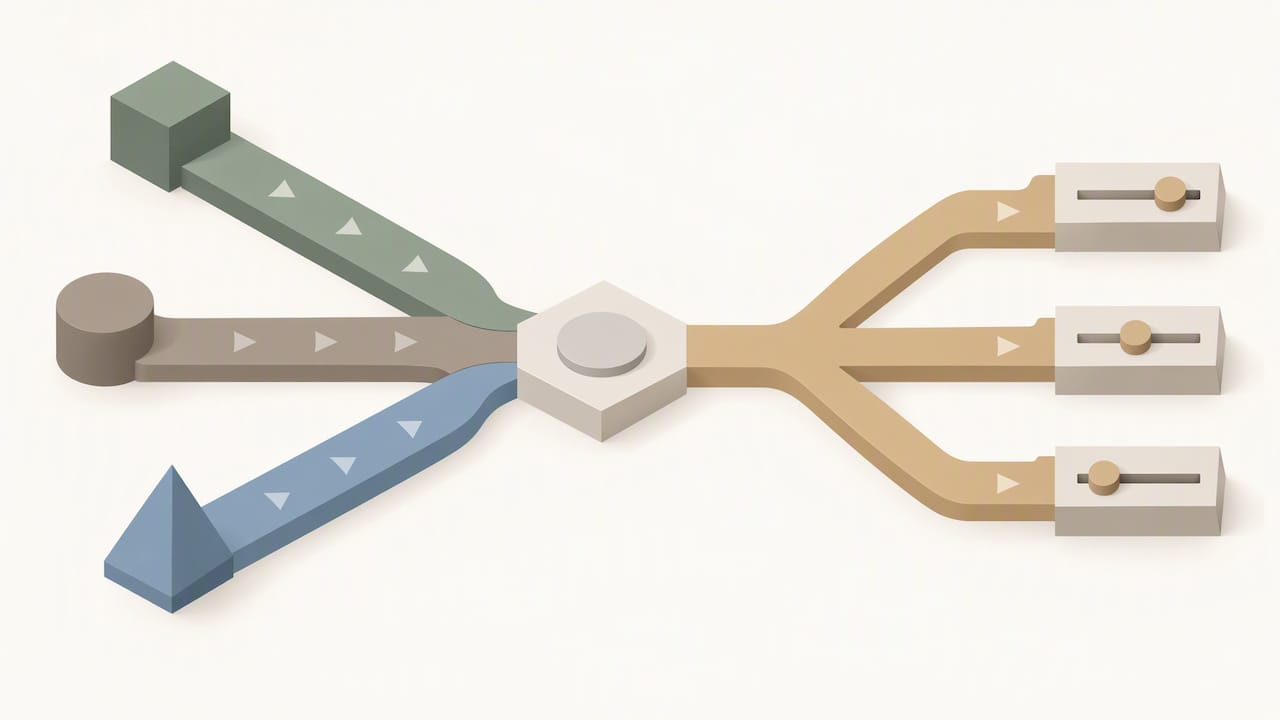
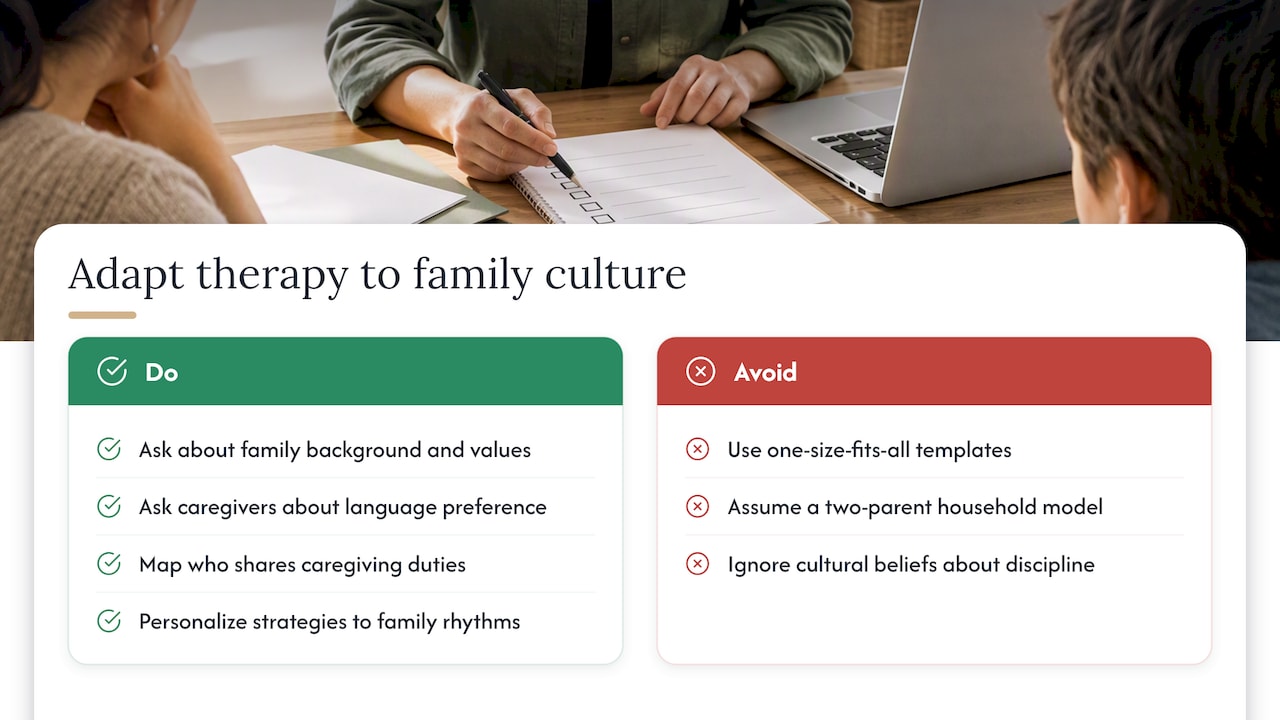
ADHD does not show up the same way in every household, and neither does the willingness to seek family therapy. Cultural beliefs about discipline, extended family involvement, and even how behavior problems are described can shape what a family is comfortable trying. A program built around one set of assumptions about parenting roles may feel out of step with a family’s actual structure or values.
Canadian advocacy resources make a point that is worth repeating here: there is no single correct way to parent a child with ADHD, according to CADDAC’s guidance for parents. Success tends to come from personalized strategies built around a specific family’s rhythms, not a rigid template applied the same way to everyone. A therapist who asks about your family’s background, language preferences, and who else plays a caregiving role is more likely to build a plan that actually fits.
This matters practically too. Multigenerational households, single-parent families, and families where extended relatives share caregiving duties may need a different session structure than a two-parent household model assumes. Good programs flex to meet that reality rather than asking families to fit themselves into one mold.
Even motivated families hit roadblocks. Scheduling is often the first one: weekly sessions for several weeks can be hard to sustain around work, school, and other siblings’ needs. Looking for programs with evening or online options can ease this, since missing sessions tends to blunt the gains that consistency produces.
Cost and insurance coverage are real barriers too, and it is worth asking upfront about direct billing or reduced-rate options rather than assuming a program is out of reach. Another common snag is one parent feeling more invested than the other, which can undercut consistency at home. Programs that explicitly coach both caregivers, or that address this tension directly in session, tend to hold up better over time.
Finally, some families stall out simply because change feels slow. Behavioral shifts in children with ADHD often happen gradually, and a few difficult weeks do not mean the approach is failing. Sticking with a measurement plan, tracking specific behaviors rather than relying on overall impressions, makes it easier to see real progress even when day-to-day life still feels messy.
Families rarely need a perfect plan. They need a collaborative one: clear, measurable steps, built with input from parents, schools, and sometimes prescribing clinicians, rather than a one-size program handed down from above. Some clinics offer free 15-minute connection calls so families can ask questions and find the right therapist fit before committing to anything.
— Deane

If you are weighing parent training, PCIT-style coaching, or broader family counseling, Supporting Wellness offers a practical starting point without requiring a physician referral first. The clinic’s family counselling services are built around the collaborative, measurable approach described throughout this article, and sessions are available in person or online with evening and weekend slots.
Services relevant to ADHD-related family needs include:
Every therapist offers a free 15-minute connection call, and the clinic provides direct billing to a range of insurers, so cost questions can be answered before your first real session. If Calgary or Red Deer affordable counselling options are a better fit for your budget, those are available too through Affordable Counselling Calgary and Affordable Counselling Red Deer. Book a connection call to talk through what your family needs.
This article is general information, not a substitute for advice from a qualified doctor. Consult a qualified healthcare professional about your own circumstances before acting on anything here.
The 10-3 rule is not a standardized clinical term found in major guidelines, so definitions vary depending on the source. Some parenting resources use it to describe giving a child ten minutes of focused activity followed by a three-minute break, but this is not an established treatment protocol.
ADHD has a strong genetic component and can be inherited from either parent, though the exact inheritance pattern is complex and involves multiple genes. Many parents of children with ADHD also show ADHD traits themselves, which is part of why family-based treatment often addresses parental functioning too, according to research on parental ADHD.
There is no single diet proven to treat ADHD, and restrictive eating in picky eaters should be addressed carefully rather than through forced food rules. When eating issues are severe, a referral to a feeding specialist or occupational therapist alongside behavioral support tends to work better than diet changes alone.
Practical strategies that show up repeatedly in family-based programs include visual schedules, breaking tasks into small steps, and using immediate, specific praise rather than vague feedback. Keeping instructions short and checking that a child can repeat back what they heard also reduces frustration on both sides.
Family therapy and parent training are generally used alongside medication, not as a replacement, particularly for school-age children with moderate to severe symptoms. For preschoolers, guidelines recommend starting with parent behavior training before medication is considered, according to the Canadian Paediatric Society.