
Children facing mental health challenges such as anxiety, autism spectrum disorder (ASD), and post-traumatic stress disorder (PTSD) often struggle with daily activities. While therapy and medication can help, service dogs have become valuable companions for these children, offering emotional support, safety, and independence.
However, these specially trained animals provide more than just companionship—they actively assist in managing symptoms and improving the overall well-being of children with the conditions mentioned above.
Service dogs are trained to perform specific tasks that cater to the unique needs of children with anxiety, autism, and PTSD. They go through rigorous training to directly influence a child’s mental and emotional health. Their presence alone can be known to offer reassurance, reduce stress, and create a sense of stability in what would otherwise be a challenging situation.

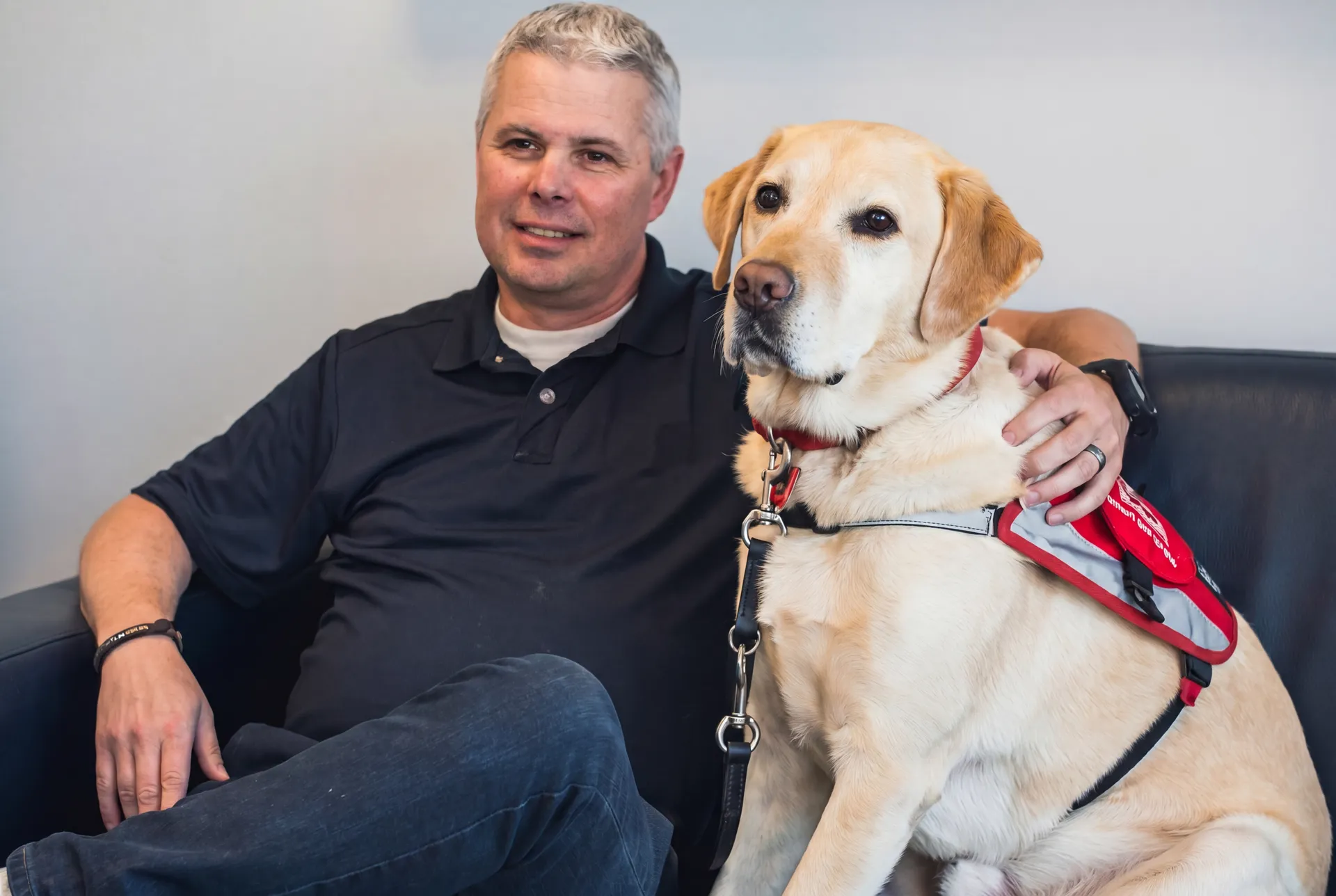
Anxiety can be highly overwhelming for children, making it difficult to navigate social settings, school, or even just their daily routines. Service dogs help in several ways:
Children with autism often struggle with sensory processing, communication, and social interactions. A service dog can be a valuable companion for both the child and their family by:
Children who have experienced trauma may struggle with trust, fear, and flashbacks. Service dogs can offer stability and security in the following ways:
Sometimes. In Alberta, a qualified service dog is one that has been trained and tested to help a person with a disability, including non-visible disabilities such as PTSD. Anxiety on its own does not automatically qualify. What matters is a diagnosed disability and a dog trained to perform specific tasks that help with it, so a pet that comforts by being nearby does not meet the standard.
There are two ways to get a qualified service dog in Alberta:
Teams that qualify receive a provincial identification card, and by law they can go anywhere the public is allowed. The Government of Alberta's service dog pages list the approved organizations and the application forms.
Whether or not a service dog is the right fit, anxiety itself is very treatable, and counselling is usually the first step.
If you believe a service dog could help your child, talking with a professional is the first step. Supporting Wellness offers counselling and assessments for children and teens dealing with anxiety, autism and trauma, and we can help you work out what kind of support fits.
Call 1-888-622-8350 or book a free 15-minute connection call to talk it through. We direct bill many insurers. See direct billing and insurance.
Related reading: Autism assessments: what families need to know, What art therapy is, How anxiety counselling helps and 7 signs your child might need a speech therapist.