
Apraxia of speech therapy works by rebuilding the brain’s ability to plan and sequence the movements needed for clear speech, and the strongest results come from frequent, repetitive practice rather than once-a-week sessions alone. Effective treatment is individualized, draws on motor learning research, and often includes augmentative and alternative communication (AAC) as a bridge, not a setback, when verbal speech is limited. Caregiver involvement and consistent home practice tend to shape how quickly progress shows up.
TL;DR:
- High trial counts and consistent, repetitive practice are essential for effective apraxia therapy, with more frequent sessions yielding faster progress.
- Individualized treatment plans that incorporate motor learning principles and often include AAC support improve communication, especially when verbal speech remains limited.
- Adults with acquired apraxia typically require urgent medical attention if symptoms appear suddenly, such as during a stroke, and therapy often follows neurological recovery.
- Differential diagnosis involves assessing for errors’ inconsistency, groping, and prosody, which help distinguish apraxia from other speech or language disorders.
- The most important factor for successful outcomes is therapy dosage and clinician experience, not the specific branded method used.
Apraxia of speech is a motor speech disorder. The brain struggles to plan or program the precise, coordinated movements of the lips, tongue, and jaw needed to produce sounds and sequence them into words, even though the muscles themselves work fine. That distinction matters for treatment: this is not a muscle weakness problem like dysarthria, and it is not simply a matter of learning sound rules like a typical phonological delay.
There are two broad forms. Childhood apraxia of speech (CAS) appears early in development, often noticed when a toddler’s babbling is limited or their speech sounds markedly different from peers. Acquired apraxia of speech (AOS) develops in someone who already had typical speech, usually following a neurological event. Because the underlying deficit involves motor planning rather than language knowledge, therapy for apraxia looks different from standard articulation therapy, which drills individual sounds, or phonological therapy, which targets sound patterns and rules.
Apraxia also tends to travel with other diagnoses, and a thorough evaluation usually checks for these alongside the speech symptoms:
A clinician who understands these overlaps builds a treatment plan around the whole picture, not just the speech sounds in isolation.
The causes behind CAS and AOS are different enough that they call for different urgency levels when you are deciding whether to seek medical attention.
In children, CAS is often linked to a broader neurodevelopmental profile. Researchers suspect genetic factors in some cases, and CAS can appear alongside other prenatal or perinatal risk factors, though in many children no clear single cause is ever identified. The practical takeaway for parents is that a cause is not required for therapy to begin: a speech-language pathologist (SLP) can start effective treatment based on the symptoms present.
Acquired apraxia of speech in adults has clearer, identifiable origins, and understanding them shapes both urgency and prognosis:
If speech symptoms appear suddenly, alongside weakness, confusion, or facial drooping, that is a medical emergency and warrants immediate attention, since it can signal a stroke in progress. Gradual, worsening speech changes over months call for a neurological workup rather than an emergency room visit, since they point toward a progressive condition that needs a different diagnostic path.
Apraxia has a recognizable fingerprint, and it often does not look like a typical speech delay or a garden-variety articulation problem. A child might say a word correctly once and then stumble on it moments later. An adult who had clear speech before a stroke might grope visibly with their mouth while searching for a sound.
Clinicians typically look for these features when they suspect apraxia:
In children, markers often include limited babbling in infancy, a small and inconsistent set of sounds, and vowel distortions. In adults, the onset is typically sudden or progressive and tied to a known neurological event, and the person usually retains full awareness of what they intend to say, which can be frustrating in itself.
Because apraxia overlaps with dysarthria, phonological disorders, and language impairments, differential diagnosis matters. A speech-language pathologist tests oral-motor strength and coordination separately from speech sound production, checks whether errors are consistent (suggesting a phonological pattern) or inconsistent (suggesting apraxia), and evaluates whether the person understands language normally, which helps separate apraxia from a broader language disorder.
A comprehensive apraxia assessment is built in layers, moving from background information to detailed speech testing, and most families can expect the process to unfold over one or two appointments rather than a single quick screening.
The evaluation typically includes:
Severity is judged by how consistent the errors are, how much connected speech intelligibility suffers, and how the person responds to cueing during the assessment itself. A person who improves quickly with modeling and cues often has a more favorable short-term prognosis than one who shows little change regardless of support, though this is one data point among several the clinician weighs.
Timelines vary by clinic and by whether the evaluation happens through a public health system, a hospital, or a private practice. Families can generally expect a written summary of findings and initial goals within a few weeks of the assessment, sometimes sooner for urgent adult cases following a stroke. If you are gathering records ahead of an appointment, past medical reports, any prior speech therapy notes, and a list of specific concerns with examples help the clinician build an accurate picture faster. For families noticing early red flags before a formal evaluation is booked, a simple checklist can help clarify whether it is time to seek one.
Apraxia therapy is built on motor learning science: the idea that the brain acquires new movement patterns through repeated, structured practice, much the way an athlete rebuilds a skill after an injury. A foundational framework describes how principles of motor learning apply to speech motor disorders, emphasizing that intensive, repetitive practice with carefully structured feedback drives lasting change far more than occasional, low-volume sessions.
Several named approaches put these principles into practice, each with a different emphasis:
No single method wins for every case. Clinicians typically choose and often combine approaches based on a person’s age, severity, and how they respond to specific cue types during the initial sessions, adjusting the mix as progress data comes in.
Motor learning principles shape the structure of nearly every session regardless of which named method is used. Repetition matters more than variety early on, since the brain needs many attempts at the same movement to start encoding it. Clinicians also manipulate practice schedules deliberately, sometimes using blocked practice (repeating the same target many times in a row) to build initial accuracy, then shifting to variable practice (mixing targets) to promote generalization to spontaneous speech. Feedback schedules matter too: frequent, immediate feedback helps early on, while more delayed or intermittent feedback later forces the brain to self-correct, which tends to support longer-term retention.
Here is what this typically looks like in a session:
Pro Tip: Ask your clinician how many practice trials your child or you are getting per session: higher trial counts are one of the clearest markers of a motor-learning-based approach.
Therapy goals for apraxia usually center on four connected outcomes: clearer intelligibility in everyday speech, more natural prosody and rhythm, accurate sequencing of sounds within words, and the ability to generalize new skills to spontaneous, unrehearsed conversation. That last goal, generalization, is often the real marker of success, since a person can often produce a target word perfectly in a drill and still struggle to use it naturally minutes later.
Dosage and intensity are where the research gives some of its clearest guidance. Motor learning research points to high trial counts and frequent practice sessions as central to meaningful progress, and standard once-weekly therapy is often not enough intensity to drive lasting motor change on its own.
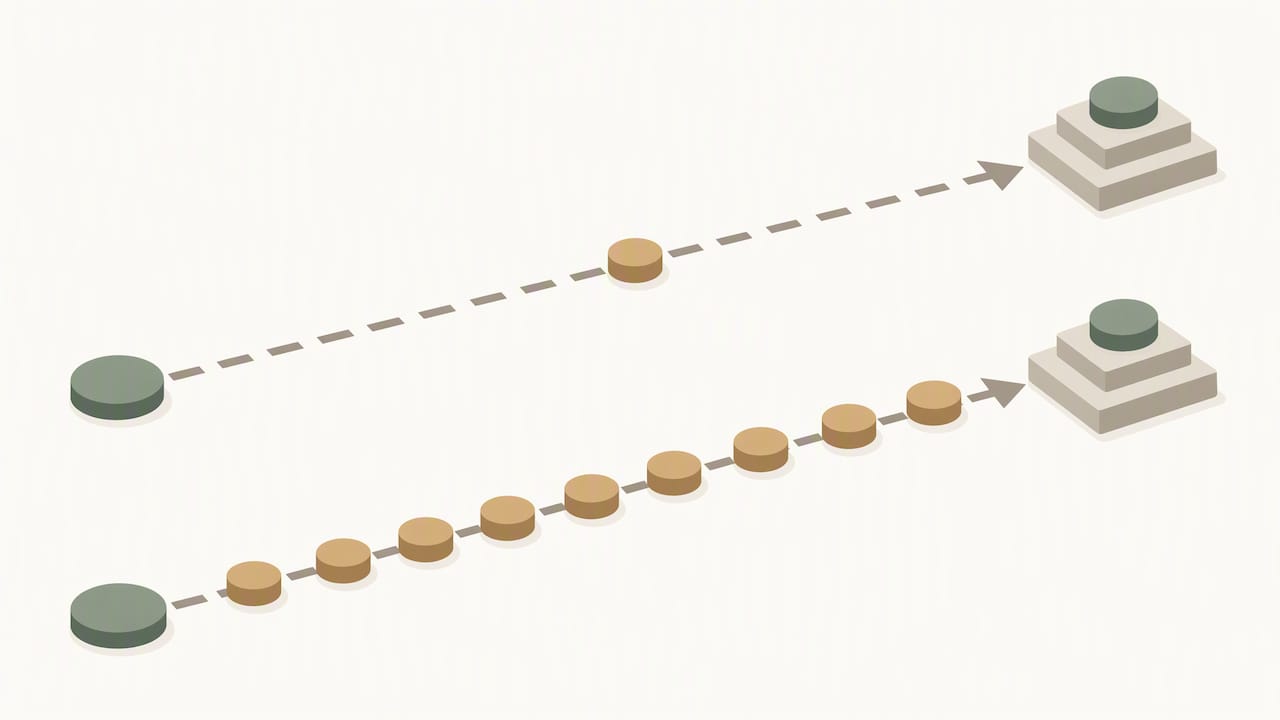
Frequent, high-repetition practice is one of the most consistently supported elements of effective apraxia therapy, according to motor learning principles for speech motor disorders, which describe high trial counts and structured feedback schedules as central to building and generalizing new speech movements.
A few practical expectations worth setting early:
Progress gets reassessed regularly, and goals shift as a person masters earlier targets, moving from single sounds and words toward phrases, sentences, and eventually unscripted conversation.
For some children and adults, oral speech is limited, especially early in treatment or in more severe cases of apraxia. This is where augmentative and alternative communication, or AAC, plays a supporting role, and it is worth being direct about a common misconception: AAC does not stall speech development.
According to the NIDCD’s overview of apraxia of speech, AAC supports communication and language development and can be used alongside motor-based therapy without hindering verbal progress. In practice, giving a child or adult a reliable way to communicate right now tends to reduce frustration and often supports language and literacy growth while motor speech skills are being built in parallel through therapy.
AAC options span a wide range, and the right fit depends on the person’s age, motor abilities, and communication needs:
Introducing AAC well takes some planning. Caregivers typically need brief training to use the system consistently at home, which matters because inconsistent use undermines the tool’s value. AAC can also support early literacy, since many systems pair spoken output with printed words. For adults facing a progressive condition like PPAOS, voice banking (recording one’s own voice in advance to personalize future synthesized speech) is worth discussing early, while natural speech is still available to record. The NIDCD’s broader resource on assistive devices for speech and communication disorders outlines how this technology continues to improve, including more natural-sounding synthesized voices.
Not every speech-language pathologist has deep experience with apraxia specifically, so a few targeted questions during intake can save months of less effective, generic articulation therapy.
Access routes vary by setting. Public health and school-based services are often the first stop and can be a reasonable starting point, though waitlists can be long in some regions. Private SLPs typically offer faster access and more flexible scheduling, sometimes at a cost that insurance may offset through direct billing. Telepractice has expanded access meaningfully, particularly for families in smaller or more remote communities, and training clinics affiliated with university programs can offer reduced-cost sessions as a bridge option.
If a waitlist is unavoidable, ask the assessing clinician for a structured home practice program with specific daily trial targets in the meantime. It will not replace professional therapy, but it can help preserve some practice intensity while you wait, with your involvement coached by the clinician who completed the assessment. Our earlier look at how speech therapy builds a child’s confidence speaks to how much consistent home involvement shapes outcomes over time.
The research on apraxia therapy is more settled on principles than on any single best method, and that distinction gets lost in a lot of consumer-facing content. Motor learning concepts, like high trial counts, structured feedback, and practice variability, have real backing, including from the motor learning literature on speech disorders. But families searching for “the one proven approach” are chasing something the evidence does not offer.
What gets underestimated is how much the clinician’s individualization matters compared to the brand name of the method. A skilled SLP applying PROMPT thoughtfully, with the right trial counts and feedback timing, will likely outperform a poorly dosed version of a more fashionable technique. The research on interventions for acquired apraxia of speech following stroke reflects this too: multiple approaches show benefit, and the strongest predictor of outcome often has more to do with intensity and consistency than which named protocol sits on the treatment plan.
Families and adult patients would be better served asking about dosage and clinician experience than about which trademarked method sounds most impressive. The method matters less than whether it is delivered with the frequency and precision the research actually supports.
— Deane
Speech therapy is available as part of a broader, evidence-based practice that also includes psycho-educational assessments, child and family counseling, and specialized treatments delivered by a multidisciplinary team. For apraxia specifically, that context matters: a child or adult working through motor speech challenges is often navigating related concerns, including confidence, school performance, or family stress, and having access to connected services in one place can simplify an already demanding process.
New clients often have the option of a short introductory call to ask questions, describe concerns, and get a sense of fit before committing to a full assessment. Services are available in person in Calgary and Cold Lake, as well as online, which can help if distance or scheduling has made consistent access difficult. If you are ready to talk through next steps for yourself or your child, you can book your free connection call and start from there.
This article is general information, not a substitute for advice from a qualified doctor. Consult a qualified healthcare professional about your own circumstances before acting on anything here.
There is no single best treatment: motor-based approaches like DTTC, PROMPT, and ReST all have research support, and the right choice depends on the person’s age, severity, and response to cueing. What matters most is frequent, high-repetition practice delivered by a clinician experienced specifically in motor learning principles for speech disorders.
Clinically, the main distinction is between childhood apraxia of speech (CAS), which appears during early development, and acquired apraxia of speech (AOS), which develops after a neurological event like a stroke in someone who previously had typical speech. Within acquired cases, primary progressive apraxia of speech (PPAOS) is a distinct, gradually worsening form linked to neurodegenerative disease rather than a single sudden event.
For many children with CAS, intensive, well-delivered motor-based therapy leads to substantial improvement in intelligibility and communication over time, though the pace and extent vary by severity and consistency of practice. Adults with acquired AOS following a stroke often see meaningful gains too, as described in research on stroke-related apraxia interventions, while progressive forms tend to require ongoing adaptive strategies rather than a cure.
Childhood apraxia of speech is often first suspected in toddlers whose babbling and early word attempts are notably limited or inconsistent, though a confident diagnosis sometimes comes later, once a child has enough speech output for a clinician to assess error patterns reliably. Parents noticing early red flags can use a quick checklist to help decide when to pursue a formal evaluation.