
EMDR (eye movement desensitization and reprocessing) can help with anxiety, especially when the worry is tied to a painful or frightening past experience. The research is strongest for trauma and PTSD, promising but still developing for phobias, panic and generalized anxiety, and it is not usually the first treatment suggested for anxiety with no trauma link. This guide explains where EMDR fits, how sessions work and how to decide if it is right for you.
The honest answer is: sometimes, and it depends on the kind of anxiety.
EMDR was developed for trauma, and that is where its evidence is strongest. Veterans Affairs Canada notes that current VA/DoD guidance endorses EMDR alongside other trauma-focused therapies for PTSD. Anxiety is a wider category, and the picture is more mixed.
A large meta-analysis of 76 trials by Cuijpers and colleagues found significant effects for phobias and test anxiety, but the studies were few and at risk of bias, so the authors did not feel there was enough evidence to recommend EMDR for other conditions. That is a cautious conclusion, not a verdict that EMDR does not work. It says more high-quality trials are needed.
The Canadian clinical practice guidelines for anxiety disorders take a similar approach. They advise that treatments with the strongest evidence for a specific anxiety disorder should generally be tried first, and for generalized anxiety disorder that points mainly to CBT-related approaches. If you want to compare the two methods directly, see our guide to EMDR vs CBT.
What does that mean for you? Think of it this way:
Generalized anxiety is the weakest spot in the evidence, so we want to be plain about it. A 2019 review of EMDR for anxiety disorders reported that, at the time, no randomized controlled trials had examined generalized anxiety disorder specifically.
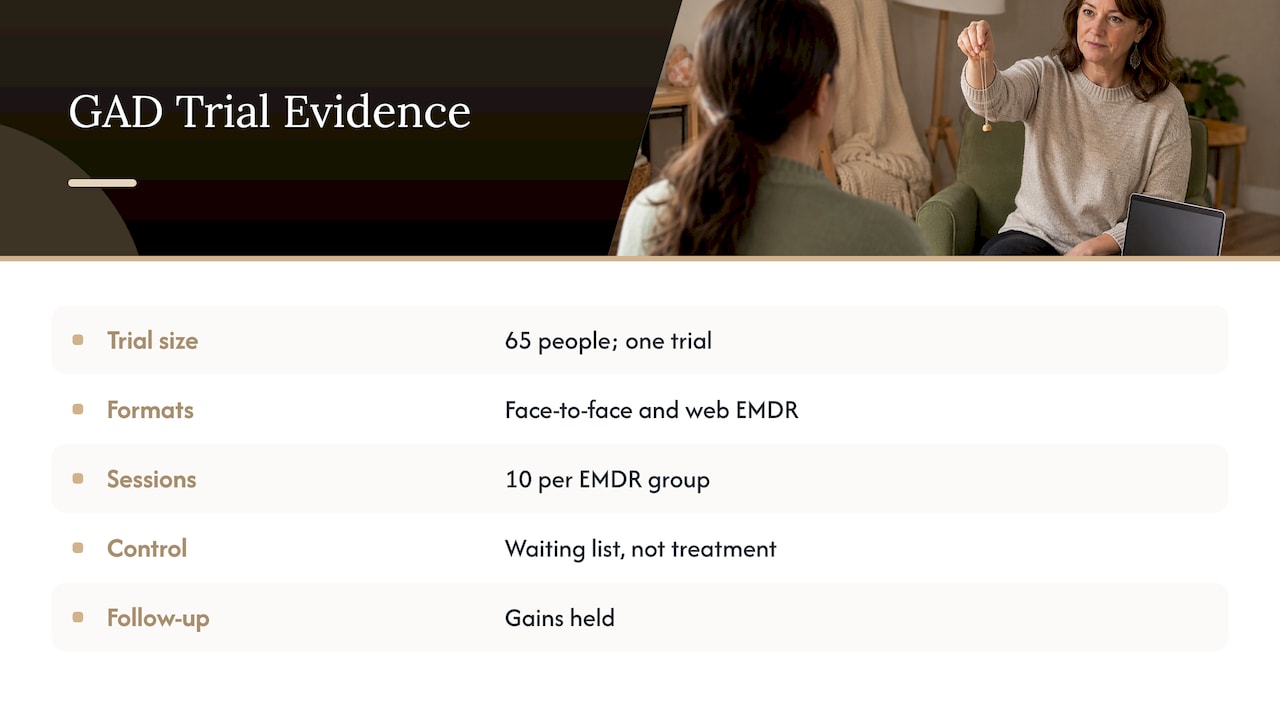
Since then, newer work has appeared. A randomized trial summarized by the EMDR International Association assigned 65 people with generalized anxiety to face-to-face EMDR, web-based EMDR or a waiting list. Both EMDR groups received ten sessions and improved significantly on anxiety and worry measures compared with the waiting list, and the gains held at follow-up.
Two caveats matter. A waiting list is not a comparison with another treatment, so the improvement cannot be credited to EMDR alone. And it is one trial. Still, it suggests that EMDR, including delivered online, is worth considering when you want an alternative to talk therapy that stays focused on thoughts alone. If you are curious about how gradual, non-drug approaches to anxiety are described more broadly, this overview of anxiety treatment without medication is a good companion read.
In EMDR, you briefly hold a distressing memory in mind while following a back-and-forth stimulation, such as eye movements, tones or taps. The American Psychological Association explains that this procedure is associated in clinical observation with less vivid and less emotionally intense memories. The memory is still yours. It simply stops setting off the same alarm.
The approach uses eight phases:
The U.S. National Center for PTSD describes sets of about 20 to 40 back-and-forth movements, with pauses to notice new thoughts, feelings and body sensations until distress drops. For a closer walk-through, read what to expect in your first EMDR session or our overview of what to expect during EMDR therapy.
No. EMDR Canada explains that EMDR can address concerns rooted in the past, present or future, and that you do not have to share every detail of what happened. If you are anxious and cannot say why, your therapist can help you trace when the feeling shows up in your body and work from there. You stay in control of how much you say.
The APA describes treatment as typically 6 to 12 sessions, with processing of a single memory often taking one to three sessions. Some people benefit from fewer. The National Center for PTSD describes weekly individual sessions of up to 90 minutes over roughly three months for PTSD, varying with need and response.
Anxiety that has built up over many years, or that sits alongside depression or trauma, may need more time, and early sessions are often spent on preparation and coping skills rather than processing. Our article on how many EMDR sessions breaks down shorter and longer timelines.
EMDR carries very low risk. Cleveland Clinic notes that the most common negative effects are upsetting thoughts or feelings between sessions, and advises contacting your healthcare provider if your symptoms change or disrupt your life. Seek emergency care right away if you have thoughts of harming yourself or others.
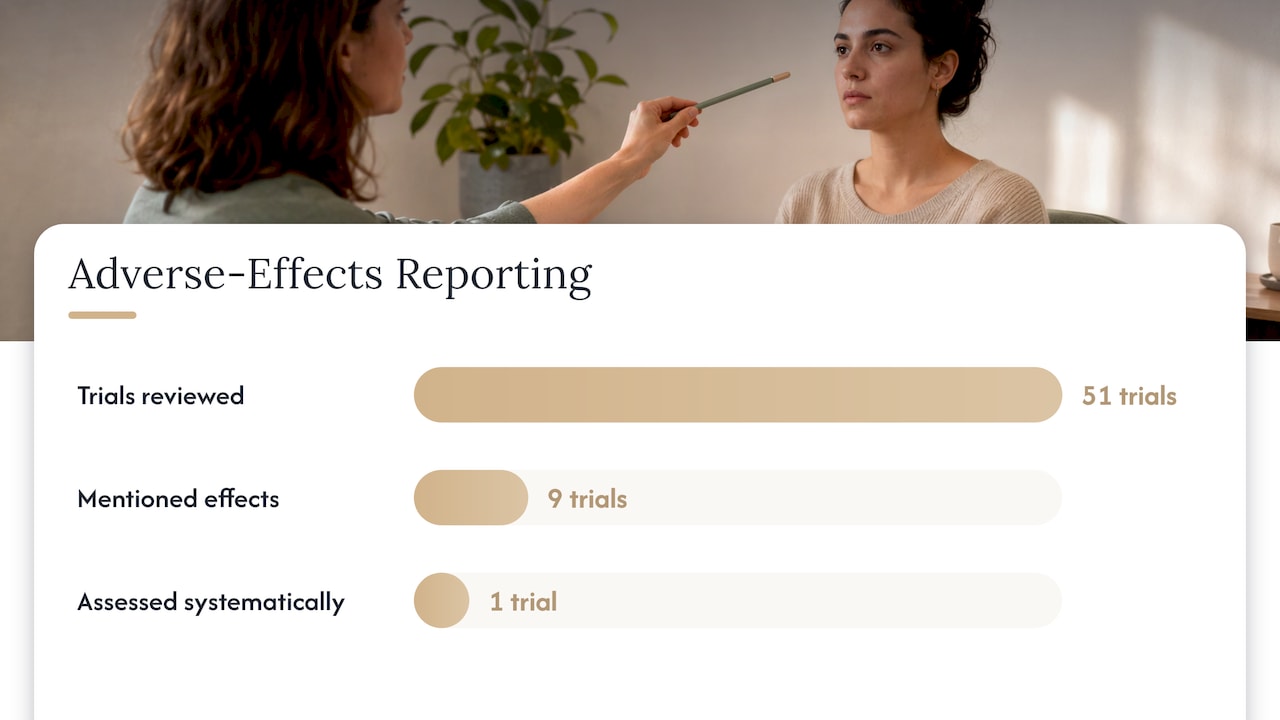
A 2025 review of 51 randomized trials found that only nine mentioned adverse effects and only one assessed them systematically. Where effects were reported, they were typically mild and temporary. The same review notes that safety evidence is thinner for complex situations and for uses outside PTSD, which is why a thorough assessment matters.
Tell your therapist before starting if any of these apply:
This is why the preparation phase exists. Your therapist teaches grounding skills and a calm-place exercise first, and closes each session so that unfinished processing does not leave you unsettled.
Anxiety in veterans and first responders often has an operational or traumatic root: a call that went wrong, a deployment, repeated exposure to death or injury. That is the territory where EMDR has the most support. As noted above, veteran-focused guidance in Canada and the U.S. includes EMDR among the recommended trauma-focused therapies for PTSD.
If your anxiety shows up as hypervigilance, startle, nightmares or avoidance, ask for a trauma assessment rather than treating it only as general anxiety. We offer counselling designed for veterans and first responders, and our team can talk through whether EMDR, another trauma-focused approach or a combination suits you. You can see the full range on our services page.
We do not publish a set EMDR session price, so we will not guess at one here. The fee depends on the clinician and the length of the session, and you can ask about it on your free connection call.
What we can tell you about paying:
When someone comes to us with anxiety, we start by asking what the anxiety is protecting them from, not by reaching for a technique. Sometimes the answer is a specific memory, and that is where EMDR can be remarkably useful. Sometimes it is a pattern of thinking that CBT skills address well. Often it is both.
We believe the right plan is the one that fits the person, and we are lucky to have a multidisciplinary team trained in EMDR, Brainspotting, the Gottman Method and other evidence-based approaches, so you are not pushed into one method. EMDR is not a quick fix, and we would never promise one. What we can promise is a careful assessment, a pace that you control and a space that is culturally safe and unhurried.
If you are unsure, try the free 15-minute connection call. It costs nothing, and it tells you whether you feel comfortable with the person you would be working with. That feeling matters as much as any method.
Deane
If EMDR sounds like it could fit, the easiest first step is a conversation. Every therapist at Supporting Wellness offers a free 15-minute connection call, and we offer evening and weekend availability, in person in Calgary, Red Deer and Cold Lake, or online.

You can read about our EMDR therapy in Calgary, our EMDR therapy in Cold Lake or book individual counselling. If you would rather not travel, online counselling in Calgary is available too. If you are curious about a related method, our comparison of Brainspotting and EMDR explains how they differ.
No treatment can promise a cure, and we would be wary of anyone who does. EMDR can reduce how intensely past experiences trigger anxiety, and many people feel calmer and more in control. The best results come when treatment is matched to the kind of anxiety you have.
Not across the board. CBT-related approaches have the longest evidence record for generalized anxiety disorder, while EMDR is better established for trauma and shows promise for phobias and panic. Which is better for you depends on what drives your anxiety, and some people use both.
Yes. In the generalized-anxiety trial described above, web-based EMDR produced improvements similar to face-to-face sessions. Online sessions need a private space and a stable connection, and your therapist will explain how stimulation is done on screen.
Not to book with us. You can contact us directly. Your insurer may have its own requirements for claims, so check your plan, and we can help with direct billing questions.