
An ADHD assessment is not a single test. It is a structured series of steps: an intake, a detailed clinical interview, questionnaires completed by you and people who know you, a check for other conditions that look like ADHD, and a written report that explains the findings. In Canada, a thorough assessment takes more than one visit, and the exact path depends on who does it and whether you are assessing a child, a teen or an adult.
If you are wondering whether to start, that uncertainty is common, and asking the question is a reasonable first step. This guide walks you through each stage so nothing about the process feels like a surprise.
Every clinic organizes the steps a little differently, but the sequence is consistent across reputable sources. The CDC describes diagnosis as a process with several steps, and CHADD describes the same pattern: an initial interview first, then a closer look at symptoms and how they affect daily life.
Here is the typical order.
The sections below take each stage in turn.
The professional you choose shapes the cost, the wait and the paperwork. CADDAC, the Canadian ADHD Resource Alliance, explains the split clearly:
| Type of provider | Usually covered by provincial plan? | Referral needed? | Typical wait |
|---|---|---|---|
| Psychiatrist, developmental pediatrician, neurologist | Generally yes | Often yes, from your physician | From 1 month to 12 months |
| Registered psychologist (private) | No | Often not required | From 2 weeks to 12 weeks, depending on specialization |
CADDAC also notes that private psychologist-led assessments in Canada generally cost between $1,000 and $4,000, and that extended health insurance may reimburse part of the fee. Because your plan’s wording varies, check your coverage for “psychological assessment” before you book. If you want a deeper look at fees and insurance, we cover it in How Much Does an ADHD Assessment Cost, and Does Insurance Cover It?
One more point from CADDAC: whoever you choose must be knowledgeable about ADHD. Ask directly how often the clinician assesses ADHD, and in which age group.
The process begins with a conversation about your concerns. For an adult, that might be trouble finishing tasks, losing track of time, feeling constantly overwhelmed, or being told for years that you “just need to try harder.” For a parent, it might be reports from school or difficulty with routines at home.
This is also the moment to ask practical questions: what the assessment includes, how many appointments it takes, what it costs, and what you will receive at the end. A free connection call can serve this purpose. At Supporting Wellness, every therapist offers a free 15-minute call so you can ask questions and see whether the fit feels right before you book anything.
ADHD is a neurodevelopmental condition, so clinicians look for a pattern that goes back in time, not just how you feel this month. Expect questions about:
CADDAC describes this stage as a comprehensive medical and psychiatric history. If you can, gather old report cards, previous evaluations, or notes from teachers. A parent or sibling who remembers your childhood can fill in details you may not recall.
Standardized rating scales are a core part of every ADHD assessment. You answer structured questions about how often you experience specific symptoms, and how much they interfere with life. Scores are compared with expected ranges for your age.
These forms do not diagnose on their own. Short screeners, like the one we discuss in Adult ADHD Testing in Canada: What an ASRS Score of 4 Really Means, can tell you whether a full evaluation is worth pursuing, but a diagnosis needs the rest of the process.
Some clinics also use computerized attention tasks as one piece of the picture. We offer CNS Vital Signs assessments for this purpose, and your clinician can explain how they fit alongside the interview and questionnaires.
The interview is usually the longest and most important part. The clinician asks you to describe specific examples: what a typical morning looks like, what happens when you try to start a task you find boring, how you handle deadlines, how long you can follow a conversation.
The goal is to understand three things:
There are no trick questions. Honest, specific answers, including the embarrassing ones, give the clearest picture.
People with ADHD often find it hard to judge their own patterns accurately. CADDAC stresses that a good assessment includes input from an outside observer, such as a partner, parent or close friend who has seen you in different settings.
For children, this usually means parents and teachers. The CDC notes that the complete evaluation for a child asks about behaviour at home, at school and in activities rather than relying on one setting. For adults, a spouse, sibling or long-time friend can complete a short form or speak with the clinician.
If you are nervous about this step, tell the person what it is for. They are not judging you. They are helping the clinician see what you may not notice.
Many conditions look like ADHD, and many occur alongside it. A careful assessment screens for anxiety, mood disorders, trauma, substance use, sleep problems and learning disabilities. CADDAC lists screening for co-occurring conditions as a standard part of a thorough evaluation.
This matters for two reasons. First, treating the wrong condition wastes time. Second, if ADHD and anxiety are both present, a good plan addresses both. Our clinic offers anxiety, depression, and PTSD and trauma counselling, so findings from an assessment can lead directly into support if you need it.
At the end, you meet with the clinician to go through the results. You should leave knowing:
The National Institute of Mental Health describes the three presentations, which clinicians use to describe how ADHD shows up for you.
People searching for what an assessment report looks like usually want to know whether it will be useful outside the clinic. A strong report typically includes:
CADDAC advises that you own the final diagnostic report when you pay for a private assessment, which matters for employment accommodations, insurance and school. Confirm this before you book.
Plan for several hours of clinical contact, usually spread over more than one appointment, plus time to score and write the report. CADDAC says the process should take more than one visit. Be wary of any offer to diagnose ADHD in a quick call.
Waiting time to start varies by provider type, as the table above shows. Private psychologists generally have shorter waits than medical specialists in the public system, though both vary by clinic and season. Ask for a realistic date for the first appointment and for the final report.
The two are often confused. A psycho-educational assessment is broader. It looks at learning, cognition and academic skills, and can identify learning disabilities. CADDAC points out that these are distinct from ADHD-specific diagnostic assessments and typically cost more, at approximately $2,000 to $4,000 in Canada.
Which do you need?
We provide both types of assessment, so we can help you decide which one matches your question. Always clarify the scope before booking.
For children, the process leans more on parents and schools. The CDC’s summary of American Academy of Pediatrics guidance recommends that providers evaluate children and adolescents aged 4 to 18 for ADHD when they have academic or behaviour problems and symptoms of inattention, hyperactivity or impulsivity. That guidance is American, but the structure (history, rating scales from several adults, and a check for other conditions) is widely used.
In practice, expect:
Our page on what parents should know about ADHD assessments goes deeper on this, and we also have a piece on whether ADHD medication changes a child’s brain for parents weighing options later.
Adults often arrive after years of coping, or after a child’s diagnosis prompts recognition. The assessment must establish that symptoms were present in childhood, even if nobody noticed. This is why old school records and a family member’s memory help.
Women and girls are often missed because their symptoms can look like anxiety, disorganization or being “too sensitive.” We discuss this in ADHD in Adulthood: Understanding Assessments and Treatment Options. If you wonder how a diagnosis relates to work protections, see Is ADHD a Disability in Canada?
A little preparation makes the assessment more accurate and less stressful.
Sleep normally the night before and eat as usual. The goal is to show how you function in real life.
At Supporting Wellness, we see the assessment as the start of understanding, not just a label. Many people come to us worn down by years of self-blame. A clear, well-explained result can change how you talk to yourself, and how your family talks to you.
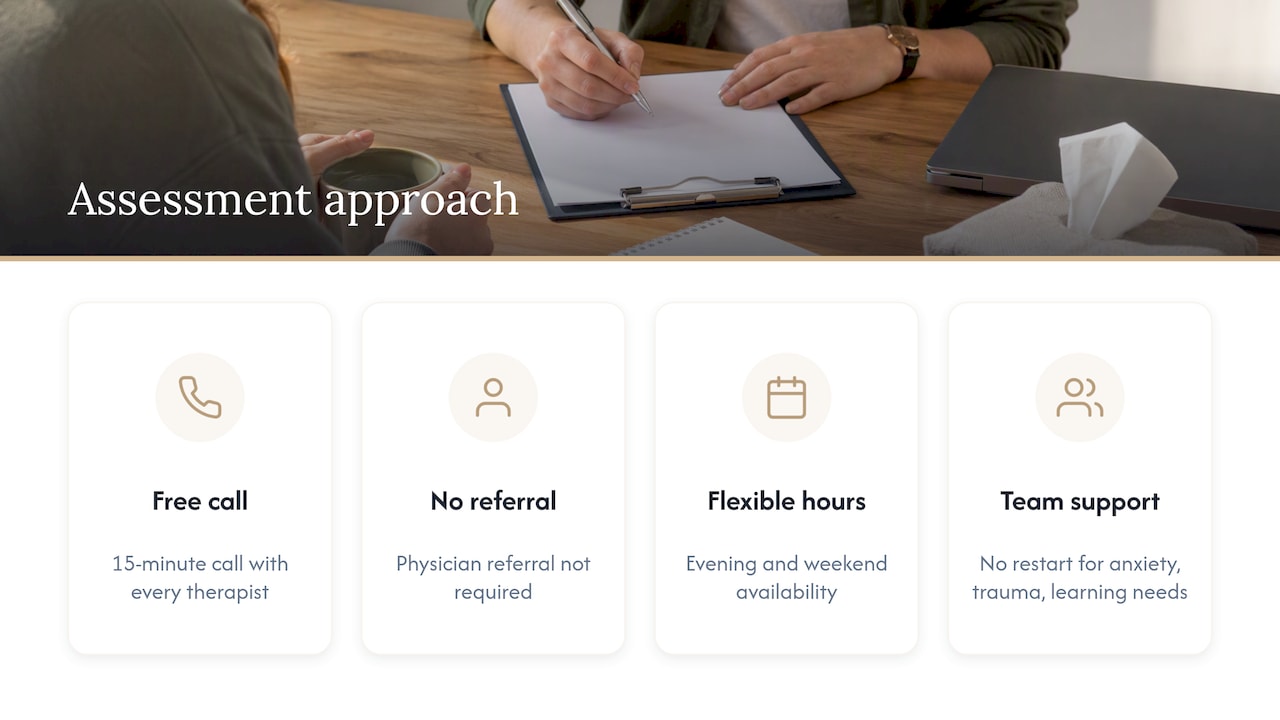
We also believe the process should feel safe. That is why we offer a free 15-minute connection call with every therapist, why we do not require a physician referral, and why we offer evening and weekend availability. We work as a multidisciplinary team, so if an assessment shows anxiety, trauma or a learning need alongside ADHD, you do not have to start over somewhere new. Our approach to treatment is evidence-based, and we are honest about what works: for example, our review of neurofeedback for ADHD found limited benefit across the trials, and we would rather tell you that than oversell it.
If you take one thing from this guide, let it be this: a good assessment is thorough, collaborative and explained in plain language. If any of those is missing, ask for it.
— Deane
We offer ADHD assessments, psycho-educational assessments and CNS Vital Signs assessments, with direct billing to a wide range of insurers, in Calgary and Red Deer, plus online options. You can read about the process on our ADHD assessments page or see everything we offer on our services page. If you are not sure where to begin, book a free 15-minute connection call and ask us anything.
After an assessment, support often continues with ADHD therapy, which helps with organization, emotional regulation and the habits that make daily life easier.
It depends on the provider. CADDAC notes that psychiatrists and pediatricians usually require a physician referral, while registered psychologists often do not. At Supporting Wellness, you do not need a physician referral.
A reliable diagnosis rarely comes from a single short visit. CADDAC says the process should take more than one visit and include history, rating scales and screening for other conditions. If a clinic offers a quick diagnosis, ask what the evaluation includes.
Online screeners can show whether your symptoms are worth exploring, but they cannot diagnose ADHD. Use the result as a reason to book a full evaluation, not as a conclusion. Our article on the ASRS screener explains how to read a score.
Yes, you should. Ask before you book and confirm you will own the final report, since you may need it for school, work or insurance. CADDAC advises that private, out-of-pocket assessments generally give you full ownership of your records.
You review the findings and recommendations with your clinician. Next steps may include therapy, skills support, accommodations at school or work, and a conversation with a physician about medication. You decide what to pursue, at your own pace.