
Neurofeedback side effects are usually mild and short-lived: tiredness, a light headache or a restless evening that passes within hours. A 2023 meta-analysis put the pooled rate of reported side effects at about 5%. Research also shows that how a session is chosen and adjusted matters a great deal. That is why we encourage every new client to talk with a therapist before the first session and to report anything unusual as soon as it happens. This guide explains what people notice, why it happens, how long it lasts and what to do about it.
Neurofeedback is a form of brain training. Sensors on the scalp pick up your brain’s electrical activity (an EEG, or electroencephalogram), and a computer turns that activity into feedback, often sound or visuals. The brain responds to that feedback over repeated sessions. Nothing is inserted into the body and no electrical current is sent in. The International Society for Neuroregulation and Research (ISNR), a professional body for the field, describes neurofeedback as non-invasive and says it produces few, if any, negative side effects.
We offer NeurOptimal® Dynamical Neurofeedback® in Calgary, Red Deer and Cold Lake. If you want to see what a session involves, how NeurOptimal neurofeedback works walks through it.
No two people feel a session the same way. Reports in the research fall into a few groups.
The ISNR lists headaches, fatigue and dizziness among the effects some people notice during or after neurofeedback. A trial of children and adolescents with ADHD found that headaches were mentioned often toward the end of sessions but usually stopped once the session was over.
Sleepiness is also common. In the same trial, feeling sleepy or even falling asleep was regular for some participants, and in one training condition it affected most participants at some point.
Some people feel anxious, irritable, distractible or briefly “off” after a session. The 2023 meta-analysis describes headaches, fatigue and irritability as moderate effects that typically vanish after a short time following a training session.
In the ADHD trial of 202 children and adolescents aged 9 to 17, researchers reported that no severe adverse events occurred. Short-lived stress-related problems were fairly frequent, mostly around sleep and tiredness, excitability, concentration, mood and headaches. Most appeared in the first two weeks.
The research literature also records rarer events. Reviewers list epilepsy, emotional dysregulation, manic episodes and memory problems among the severe effects reported across studies. A 2008 clinical article gathered clinician reports ranging from increased anxiety and sleep disturbance to temporary disorientation. These are described as uncommon and tied to particular circumstances, which the next sections cover. If you have a history of seizures, bipolar disorder or another condition you are concerned about, say so at the start so your therapist can plan around it.
| Type | What people describe | Usual pattern |
|---|---|---|
| Physical | Headache, fatigue, dizziness, sleepiness | Often fades once the session ends |
| Emotional | Edginess, irritability, mood shifts | Often brief, and most noticed early in a course |
| Cognitive | Distractibility, feeling unfocused | Usually short-lived |
| Sleep | Drowsiness, or restless sleep that night | Often settles with adjustments |
| Rare | Depersonalization, mood or memory changes | Reported infrequently, often with pre-existing conditions |
The table summarizes the research cited in this article, not a prediction for any one person.
The best figure we have comes from the 2023 meta-analysis by Rahmani and colleagues, which pooled many studies. It found a pooled prevalence of 0.05, with a 95% confidence interval of 0.03 to 0.08. In everyday terms, that is roughly 5 people in 100 across the studies, and plausibly between 3 and 8.
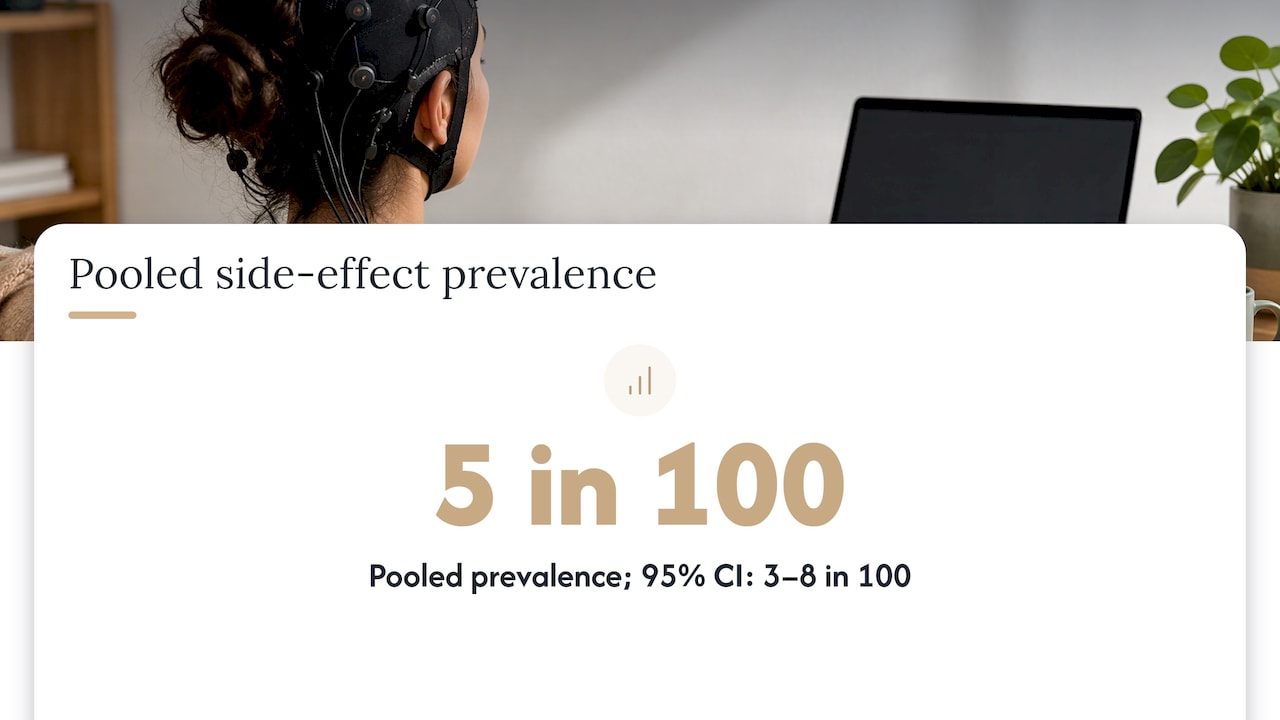
Another look at medical and research-grade neurofeedback products, described in the Trusted Neurotechnology Initiative guidebook, found side effects in 5 of 21 experiments. The most frequent were headset discomfort and drowsiness, followed by irritation and headache.
These numbers describe studies with different protocols, ages and conditions. They are not a promise about your own sessions. They do show that effects, when they occur, tend to be mild and practical to manage.
Most moderate effects pass quickly. The meta-analysis notes that many disappear shortly after a training session ends. In the child ADHD trial, most reported side effects came in the first two weeks, which suggests the early sessions are when you are most likely to notice something.
A useful habit is to notice how you feel at three points: during the session, in the hour afterward and that evening. Then mention what you saw at your next appointment. Small details such as “I got a headache about 20 minutes in” help your therapist adjust.
This is the part that matters most for choosing a provider. Researchers do not describe side effects as random. They point to how training is set up.
The 2023 meta-analysis names inappropriate protocols, and general protocols that disregard a person’s mental status, comorbidities and EEG activity, as primary causes. A comorbidity is another condition present alongside the main one, such as anxiety alongside ADHD. The authors also report that protocols designed to increase certain brainwave activity were more associated with side effects than those designed to decrease it. Their conclusion is that training works best when it is designed around the individual.
A randomized, sham-controlled study of 30 healthy students over ten sessions found transient effects, some general to neurofeedback and some specific to the protocol used. This supports the same point: the type of training shapes what people feel.
Hammond and Kirk’s 2008 article says a large share of negative and transient effects may come from approaches that reinforce and increase EEG activity, rather than discouraging problem activity. They also note that unsupervised home training raises the risk of negative effects.
The same authors argue in a 2016 article that the public needs protection from people using neurofeedback for medical, psychiatric or psychological conditions they are not qualified or licensed to treat. For you, that means asking who will be guiding your sessions and what their training is.
The Trusted Neurotechnology Initiative notes that the safety of consumer neurofeedback products has not been fully tested, and the risks of everyday use are unclear. Sessions guided by a professional, in a clinic, give you someone to report to in real time.
A little preparation makes sessions more comfortable.
Our therapists offer a free 15-minute connection call, so you can ask these before you book. No physician referral is needed, and we offer evening and weekend availability for people who work days.
Stay calm. In most cases the feeling is brief. These steps help.
Seek urgent medical care, or call 911, if you have a seizure, severe or sudden headache, confusion that does not clear, or thoughts of harming yourself. If you are in distress in Canada, you can call or text 988, the Suicide Crisis Helpline. These situations need a doctor or emergency service, not a session adjustment.
Anyone can ask questions, and a few groups benefit most from a thorough conversation before starting:
This list reflects the severe effects the literature records and the point that comorbidities should shape the protocol. It is a reason for a careful intake conversation, not a reason to stay away.
We hear the same question from nearly everyone who is curious about neurofeedback: will it make me feel worse before I feel better? It is a fair thing to ask, and you should get a straight answer.
The research tells us that effects are usually mild, that they tend to pass quickly, and that the way training is set up and supervised makes a real difference. That is why we think the first step is a conversation, not a booking. Our free 15-minute connection call with every therapist is there so you can describe your history, ask what a session feels like and decide whether you feel understood.
We also believe neurofeedback sits best inside a wider picture of care. Our team offers evidence-based therapy including EMDR and Brainspotting, family and couples counselling, and assessments, so if neurofeedback is one piece of your plan, the rest can be coordinated under one roof. If you notice anything during your sessions, tell us. That is exactly what we want to hear.
Deane
If you are in Alberta and want to try neurofeedback with support around you, we offer NeurOptimal® Dynamical Neurofeedback® in Calgary, Red Deer and Cold Lake, with direct billing to a wide range of insurers.

Book a free connection call through our services page to talk it through with a therapist. If you would like counselling alongside neurofeedback, see individual counselling in Calgary, or visit our home page to find the location nearest you.
Parents often ask this first. In the trial of 202 children and adolescents aged 9 to 17, no severe adverse events were reported, and the more common effects were temporary: sleep and tiredness, excitability, concentration difficulty, mood changes and headaches. Most were reported in the first two weeks.
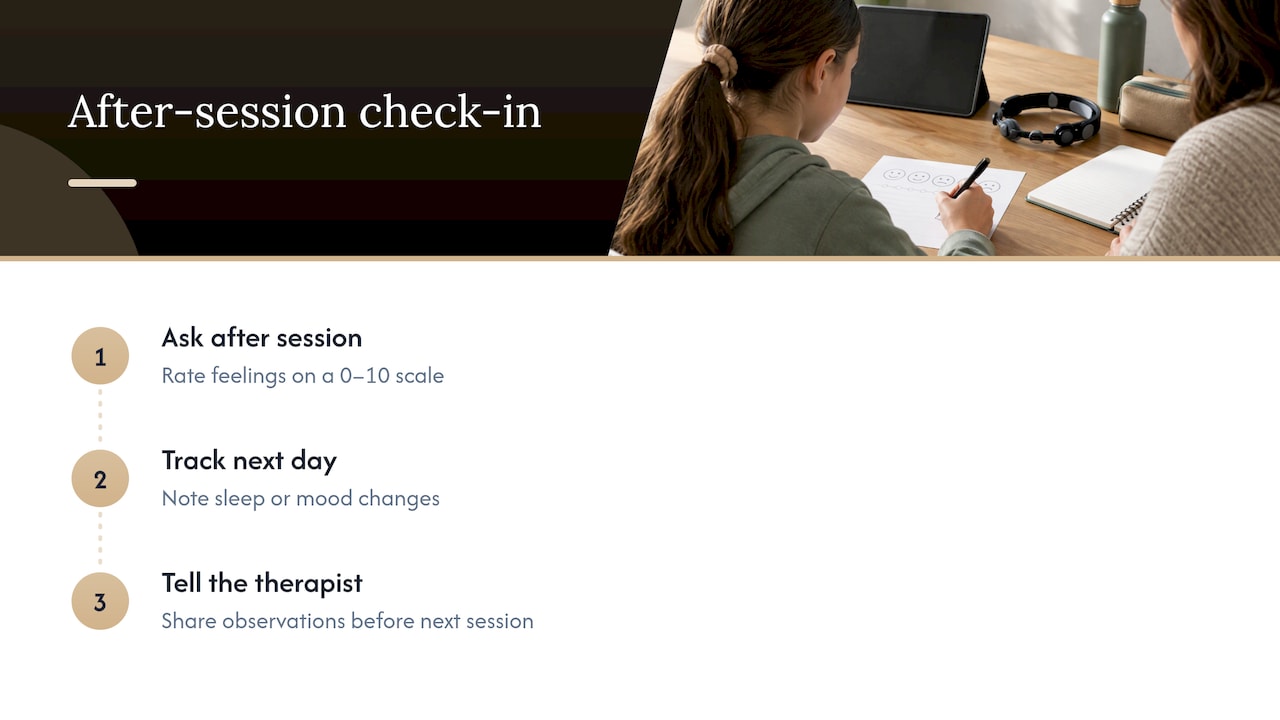
For your child, a few habits help. Ask them after each session how they feel, and note any change in sleep or mood over the next day. Share what you see with the therapist before the next session. Children do not always have the words for a headache or a restless feeling, so a simple 0-to-10 scale can work well. If your family also needs support with focus, anxiety or relationships, our team covers child and adolescent counselling and family work, and you can read about how ADHD and anxiety can look alike in adults if you are sorting out your own symptoms.
The main ones are short-term: tiredness, headache, sleepiness or feeling edgy after a session. Research ties these effects mostly to protocols that do not fit the individual. Sharing your history and reporting what you notice lets your therapist adjust.
Many moderate effects vanish a short time after a session ends. In children with ADHD, most reported effects came in the first two weeks of training. If something lasts longer than a day or two, tell your therapist before your next session.
The ISNR describes it as non-invasive, with few if any negative side effects. Safety is best supported by working with a qualified provider in person, who can check in with you and adjust. Home devices have not been fully tested for safety.
Eat and drink normally, sleep as well as you can and tell your therapist about seizures, head injuries, medications and trauma history. Keep your schedule light afterward in the first week or two. You can raise any questions on a free 15-minute connection call.
No physician referral is needed. You can book a free connection call, meet your therapist and decide from there. We also offer evening and weekend availability.