
A therapy consultation call is a brief (usually 10 to 20 minute) phone or video conversation used to check mutual fit and logistics, not a therapy session or an emergency assessment. Its purpose is simple: you get a feel for the therapist, and they learn whether their approach matches what you need. When you book one, confirm the exact length and whether it comes at no cost, since practices vary.
TL;DR:
- Most consultation calls last 10 to 20 minutes and focus on assessing mutual fit, approach, logistics, and next steps without delving into a full treatment plan.
- Therapists typically ask concise questions about your current concerns, previous therapy experience, safety, and their treatment methods during the call.
- Asking direct questions about credentials, approach, fees, confidentiality, and session format helps determine if a therapist fits your needs and establishes clear communication.
- Behaviors like pressure to book immediately, vague responses, or inappropriate comments indicate red flags, while respectful, transparent answers suggest a trustworthy match.
- A consultation call is crucial for screening therapists before committing, and it is always acceptable to decline further sessions if the fit does not feel right.
A consultation call moves quickly and covers a narrow set of topics. Most calls follow a similar rhythm, whether they happen by phone or video, and they typically run 10 to 20 minutes, with some practices allowing up to about thirty minutes.
This is not the same as an intake or a first session. A consultation gathers just enough information to judge fit, while an intake or first appointment involves a fuller history, formal assessment questions, and the start of a treatment plan. Nobody should expect a diagnosis or a treatment plan from a 15-minute call.
Therapists use the call to understand your situation quickly and to check that they are the right match. Expect a handful of direct, focused questions rather than a deep dive.
These questions echo the kind of intake prompts described in CAMH’s assessment guidance, which asks clients what they hope will change and what prior treatment looked like. A short, clear answer works better than a long history.
Pro Tip: Write down two or three sentences about your main concern before the call so you are not searching for words while talking.
The call is a two-way conversation. Asking a few pointed questions tells you far more than a polished introduction does, and it mirrors what CCPA guidance describes as informed consent: clients should understand fees, techniques, and confidentiality before starting.
A therapist who answers these clearly, without dodging or rushing you, is giving you a preview of how they will communicate once you are in treatment.
Most consultation calls are straightforward, but a few behaviors are worth noticing. Evidence briefs on dual relationships and boundaries point to pressure and boundary blurring as recurring concerns in mental health care settings.
Ask a direct question and watch the response. A question like “How do you usually work with anxiety?” should get a clear, jargon-free answer with a concrete example, not a rehearsed line.
Positive signals look different: a therapist who explains consent clearly, answers respectfully, and invites you to plan together. It is entirely fine to decline after a call and keep looking. Our guide on choosing the right therapist walks through how to weigh these signals if you want more detail.
A consultation call ends in one of three ways: you book an intake or first session, you ask for a referral elsewhere, or you decide to keep searching. All three are normal outcomes, and none of them reflect poorly on you.
If you move forward, the first paid session looks different from the call itself.
Our page on what to expect in a first EMDR session shows how a first session can differ by approach. You are never locked into the first therapist you speak with, and comparing a couple of providers before committing is a reasonable step, not a wasted one.
A free 15-minute connection call with a therapist is offered before you commit to booking. The goal matches what this guide describes: check fit and logistics before anything else.
On the call, you can ask about a therapist’s approach, whether that means EMDR, Brainspotting, or the Gottman Method, along with direct billing options, evening or weekend availability, and what scheduling looks like once you decide to move forward. You can also ask how sessions are structured for your specific concern, whether that is adolescent counselling or a couples issue.
Use the call the same way you would with any provider: as a chance to compare, ask direct questions, and decide without pressure whether to book an intake.
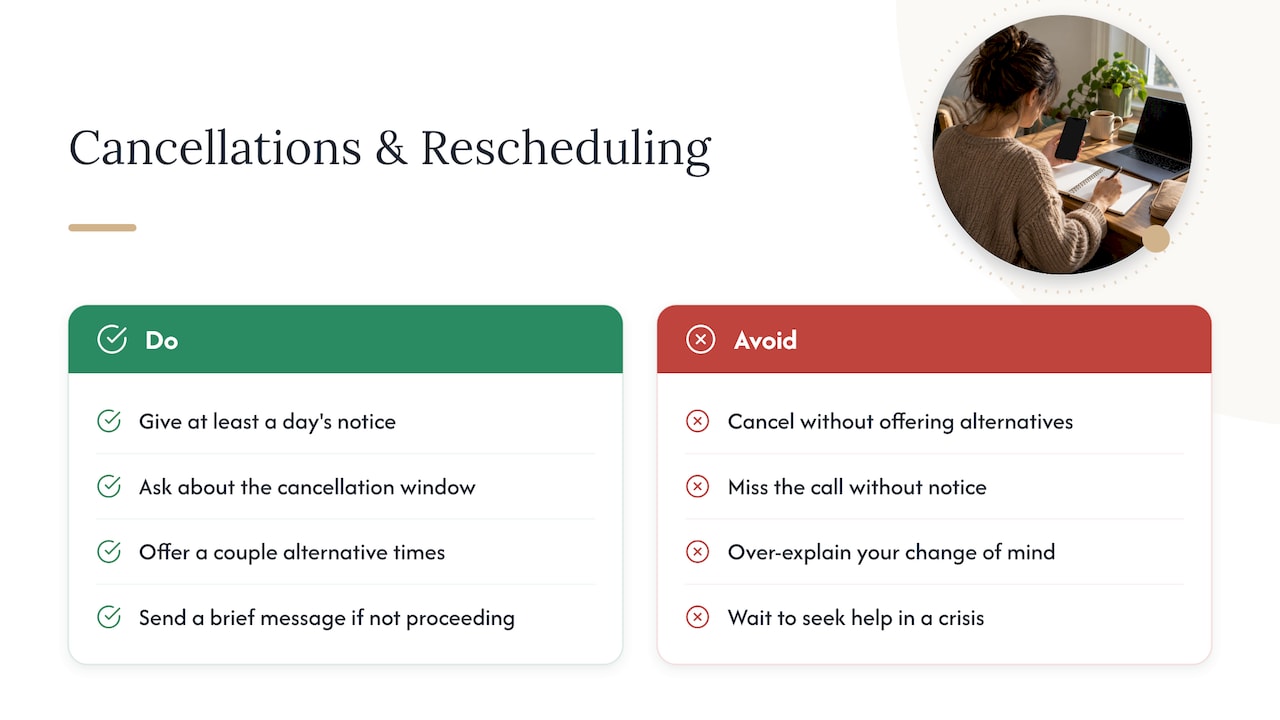
Plans change, and a consultation call is easy to move if you give reasonable notice. Most practices ask for at least a day’s notice, though policies differ, so ask about the cancellation window when you book.
If you need to reschedule, a short message naming a couple of alternative times usually works better than canceling outright, since it keeps the process moving. If you miss the call without notice, most practices will simply offer to rebook rather than penalize you, though a paid first session may carry a different cancellation policy worth asking about upfront.
If your circumstances shift and you decide not to proceed at all, a brief message saying so is enough. Therapists build slots for consultation calls expecting some will not lead to bookings, so there is no need to over-explain a change of mind. The one exception is safety: if you are in crisis and cannot wait for a rescheduled call, contact 9-8-8 rather than waiting for your next appointment, since it operates by voice and text around the clock.
The biggest mistake readers make is treating the consultation call as a formality to get through before “real” therapy starts. It is not a formality. It is the only point in the process where you get to interview the person who will hear your hardest material, and most people skip that step out of politeness or nerves.
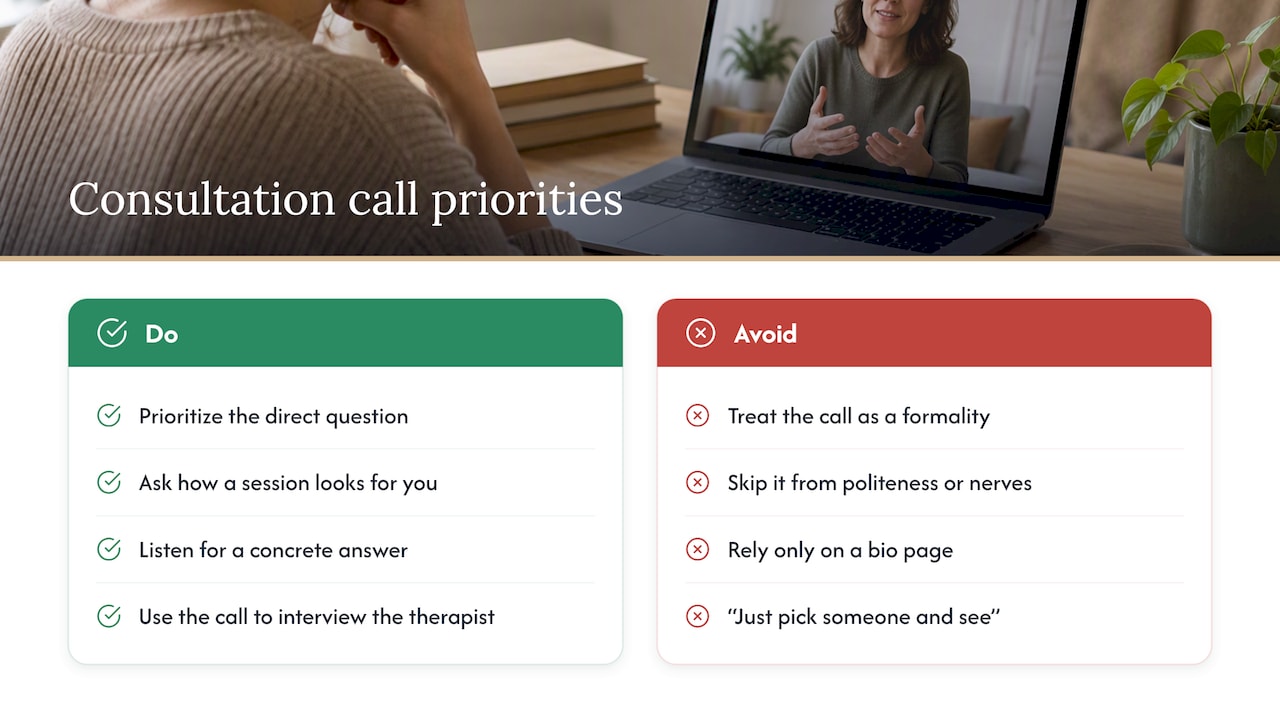
The conventional advice to “just pick someone and see how it goes” undersells how much a mismatched approach costs you in wasted sessions and stalled progress. A five-minute exchange about how a therapist actually works with your specific concern tells you more than a bio page ever will.
If you take one thing from this guide, prioritize the direct question over the polite one. Ask what a session with them looks like for someone in your situation, and listen for a concrete answer rather than a general reassurance. That single habit does more to protect your time and your trust than any checklist.
— Deane
If you are weighing your options after reading this, a free 15-minute connection call gives you a low-pressure way to test fit before booking anything. Supporting Wellness offers this call with every therapist across its team, so you can ask about approach, availability, and cost without any obligation to continue.

New clients often start with:
Direct billing is available with many insurers, which we can confirm on your call. If you are in immediate crisis, call or text 9-8-8 rather than waiting for a scheduled appointment. Otherwise, book your free connection call and see if it feels like the right fit.
This article is general information, not a substitute for advice from a qualified doctor. Consult a qualified healthcare professional about your own circumstances before acting on anything here.
A red flag is any behavior that pressures you, blurs professional boundaries, or avoids clear answers about credentials, fees, or confidentiality. Guaranteed outcomes, evasive responses, and inappropriate personal comments are common examples worth taking seriously.
Therapists typically ask what brought you to therapy now, whether you have tried treatment before, and basic safety questions about self-harm or suicidal thoughts. They also explain their own approach and check that it fits your concern.
A short call like this covers introductions, a brief description of your concern, an overview of the therapist’s approach, and basic logistics like fees and scheduling. It ends with a decision about whether to book an intake or first session.
Prepare a two or three sentence summary of your main concern and what you hope changes, then use the call to ask about credentials, approach, and fees. Listen for clear, specific answers, and remember you can decline and keep looking if the fit feels wrong.