
Neurofeedback is a specific type of biofeedback. Biofeedback is the broad family: sensors measure something your body does, such as heart rate, muscle tension or skin temperature, and show it back to you in real time so you can learn to shift it. Neurofeedback uses the same idea but measures brain activity (EEG) instead. If you are comparing the two, you are really deciding which signal you want to work with: the body, the brain, or both.
This guide explains the difference in plain language, what a session looks like, what is known about safety and results, and how to decide where to start. We offer NeurOptimal® Dynamical Neurofeedback® at Supporting Wellness, so we also say where that fits.
The Ordre des Psychologues du Québec explains that biofeedback is a generic term for any technique that uses sensors to measure and record physiological signals, including body temperature, respiration, heart rate, muscle tension or brain waves, and returns that information to you as visual or sound signals on a screen. Brain waves are one item on that list. That is why you will see neurofeedback called “EEG biofeedback.”
So the comparison is less “A or B” and more “the whole category or one part of it.” Here is how it looks side by side.
| Biofeedback (general) | Neurofeedback | |
|---|---|---|
| What is measured | Body signals: heart rate, muscle tension, skin temperature, breathing, sweat response | Electrical activity of the brain (EEG) |
| Sensor placement | Fingers, chest, muscles, skin | Scalp, and sometimes ears |
| What you see or hear | Graphs, tones or colours that follow your body’s response | A game, film or sound that responds to your brainwave activity |
| Typical goal | Learn to relax muscles, slow breathing, steady heart rhythm | Support self-regulation of the brain and central nervous system |
| Who guides it | Trained clinicians in many fields | Usually a psychologist or other professional trained in neurofeedback |
The row that matters most for most readers is the last-but-one: biofeedback often teaches a skill you consciously practise, like relaxing a muscle. Neurofeedback usually works through the brain’s own learning processes while you watch or listen.
HealthLink BC describes biofeedback as a way to control a body function you normally do not control consciously, such as skin temperature, muscle tension, heart rate and blood pressure, with the aim of improving health and performance.
The same page lists the main types:
HealthLink BC says biofeedback may be used for anxiety, depression, headaches, incontinence, stroke recovery, sleep problems and stress, and may help control chronic pain. It is a useful reminder that the umbrella covers many goals, and the right type depends on the problem you want to work on.
The International Society for Neurofeedback and Research (ISNR) describes neurofeedback as a therapeutic intervention that uses a brain-computer interface. A sensor tracks your brainwave activity in real time, software interprets it, and the feedback you receive encourages your brain to adjust specific activity. Through learning processes, self-regulation of brain and central nervous system function is taught. The ISNR notes that neurofeedback has been practised for well over six decades.
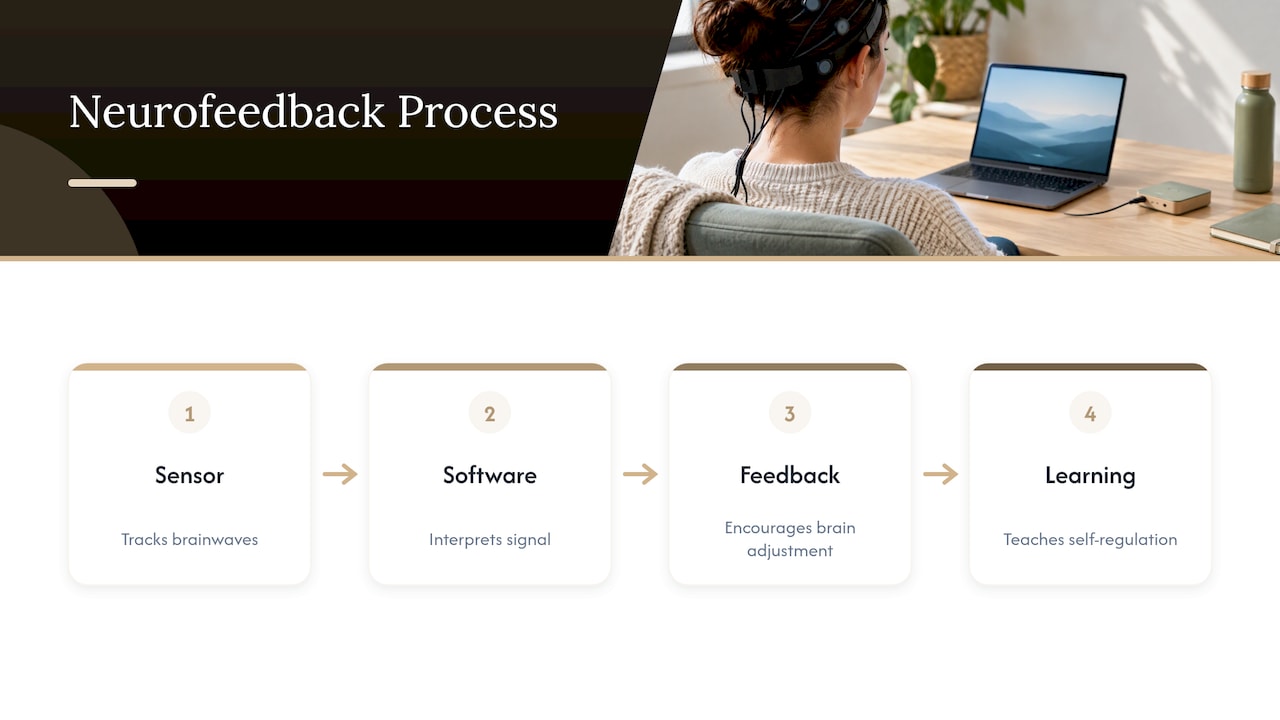
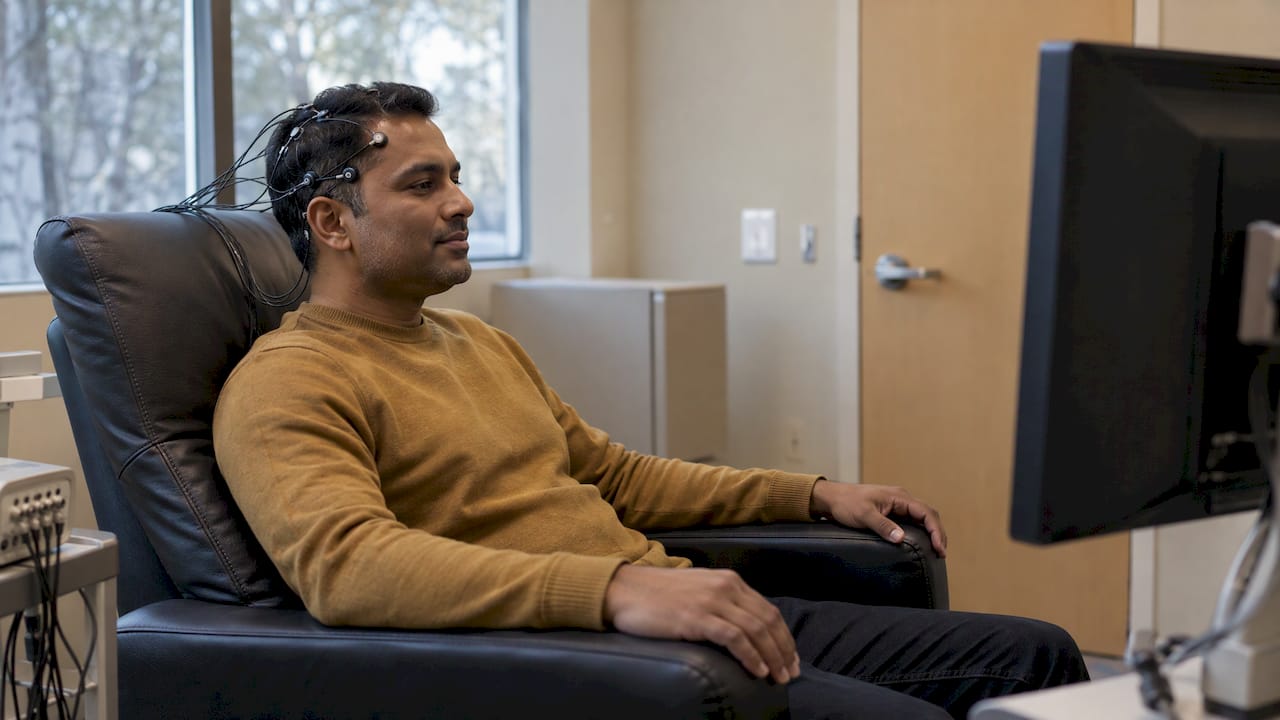
In practice, you sit comfortably while small sensors rest on your scalp. A screen shows a video or plays audio. The picture or sound changes as your brain activity changes, and that signal is how your brain gets information about itself.
There are different approaches inside neurofeedback. Some protocols ask you to move a specific brainwave pattern in a chosen direction. Others, such as NeurOptimal, are designed differently. You can read how our approach is set up on our page about how NeurOptimal neurofeedback works.
According to eMentalHealth.ca, neurofeedback starts with an assessment by a professional with neurofeedback expertise, such as a psychologist. The Ontario information page says scalp sensors are used while the person tries to influence a video game or movie through focus and relaxation. Patients usually train twice a week for half an hour, or once a week for an hour.
How many sessions? The ISNR FAQ says typical regimens range from 20 to 40 sessions, and that this can be lower or higher depending on the provider’s approach and the concerns being addressed. It also says some people notice benefits after a single session, while others with more complicated histories may need a few sessions before they notice changes.
For veterans, Medavie Blue Cross’s bulletin for Veterans Affairs Canada says that, following ISNR practice guidelines, 20 to 40 sessions are recommended. VAC approves 25 hours of neurofeedback per calendar year as an adjunct to a first-line evidence-based treatment for posttraumatic stress disorder, generalized anxiety disorder or major depressive disorder. If you are a veteran, your case manager can confirm what applies to you.
Biofeedback for a single concern, such as muscle tension or breathing, often involves learning a skill and then practising it at home. Your clinician will tell you how many visits to expect.
It helps to know how the evidence is described by Canadian sources. eMentalHealth.ca notes that evidence suggests neurofeedback may be useful for post-traumatic stress disorder and ADHD, and that research for mood and anxiety disorders is still developing. HealthLink BC lists a wider set of uses for biofeedback overall, including stress, sleep problems and headaches.
A practical way to use this: treat neurofeedback or biofeedback as one part of a plan, alongside talk therapy and other care, not as a stand-alone cure. That is also how the Veterans Affairs guidance frames it, as an adjunct to first-line treatment.
If ADHD is your reason for looking, we wrote a clinic review of neurofeedback trials for ADHD that goes into the detail. One related point from the Canadian ADHD Resource Alliance: its practice guidelines state that EEG testing is not a validated diagnostic tool for ADHD and that it does not endorse using it for that purpose. If you want to find out whether you have ADHD, a proper assessment is the right first step, and we offer CNS Vital Signs assessments and ADHD assessments for that.
Both approaches are non-invasive, and most people tolerate them well. HealthLink BC describes biofeedback as safe and says it works best when taught by someone well trained in the technique. Skin sensors can sometimes irritate the skin, so tell your clinician if you notice redness.
For neurofeedback, a systematic review by Luctkar-Flude and Groll found it safe and well tolerated, with no study reporting participants dropping out because of side effects. Some people do report temporary effects. In one trial reviewed, 52.5% of participants reported at least one side effect at some point, most often fatigue, pain, sleep problems and muscle stiffness or spasms. In another, the most common effect was a short-lived intensification of familiar symptoms, such as head pressure, headache, dizziness or nausea, usually in the first six or seven sessions and settling within a few days.
The Ordre des Psychologues du Québec also lists reported adverse effects in the literature, including emotional changes, headaches, sleep problems, fatigue and anxiety, and stresses that practitioner qualifications matter. Practical steps that follow from this:
If you have epilepsy or a seizure history, speak with your physician before starting neurofeedback.
Costs depend on the approach, the provider and how many sessions are planned, so a single national figure would mislead you. Clinic-based care is paid per session, and the total depends on the number of sessions your plan needs. Home devices are a separate purchase and do not include a clinician reading your results or adjusting your plan.
We do not publish a price for NeurOptimal sessions online. The simplest route is to book a free 15-minute connection call, where we can explain what to expect and how direct billing with your insurer may work.
Start with what you want to change.
It also helps to think about what else is going on. If you are living with trauma, our EMDR therapy and talk therapy sit alongside neurofeedback in many plans. If you are weighing talk therapies against each other, our EMDR vs CBT guide lays out the trial evidence. And if you are unsure whether what you feel is anxiety or something else, see ADHD vs anxiety in adults.
Our perspective
People often arrive thinking they have to pick between two competing technologies. In our experience, the better question is what you want support with, and what you are ready for. Some people want a skill they can practise, and some want something they can sit with while a session runs.
At Supporting Wellness, NeurOptimal® Dynamical Neurofeedback® is one of the specialized services our multidisciplinary team offers, next to EMDR, Brainspotting and evidence-based therapy. We like that it can sit alongside counselling, so your care is not one tool but a plan built around you.
We also believe you should feel comfortable before you commit. That is why every therapist offers a free 15-minute connection call, no physician referral is needed, and we offer evening and weekend availability and direct billing with a wide range of insurers.
Deane
If you are curious about neurofeedback, we can walk you through what a session looks like and whether it suits your goals. Our team works in person in Calgary, Red Deer and Cold Lake, and online counselling is available too. See our NeurOptimal neurofeedback in Calgary page, or book a free 15-minute connection call with a therapist.
Prefer to start with counselling? Browse all of our services, including individual counselling and therapy. Red Deer and Cold Lake clients can read about NeurOptimal in Red Deer and in Cold Lake.
Not exactly. Neurofeedback is one form of biofeedback, the one that measures brain activity. Other forms measure things like heart rate, muscle tension, breathing or skin temperature. The shared idea is that seeing your own signal in real time helps you learn to change it.
Some biofeedback skills, such as slow breathing practice, can be reinforced at home once a trained clinician has taught them. HealthLink BC notes that biofeedback works best when taught by someone well trained in the techniques. A clinician can also match the type of biofeedback to your concern.
The ISNR says typical regimens run 20 to 40 sessions, though it can be fewer or more depending on the provider’s approach and what is being addressed. Some people notice changes early, others take a few sessions. Your clinician will review progress with you as you go.
A systematic review found neurofeedback to be safe and well tolerated, with no dropouts due to side effects. Some people feel tired or have a temporary headache in early sessions. Tell your clinician about any changes, and speak with your physician first if you have epilepsy or a seizure history.
No physician referral is needed to book with us. You can start with a free 15-minute connection call, and we can tell you how direct billing with your insurer may work.